 BRAINCAKE
Reaction with Concentrated Sulfuric Acid
Alkenes react with cold concentrated sulfuric acid by electrophilic addition. With ethene the product is ethyl hydrogensulfate:
In H2SO4 the O–H bonds are polar, so each hydrogen atom is δ+. That hydrogen is the electrophile.
Mechanism:
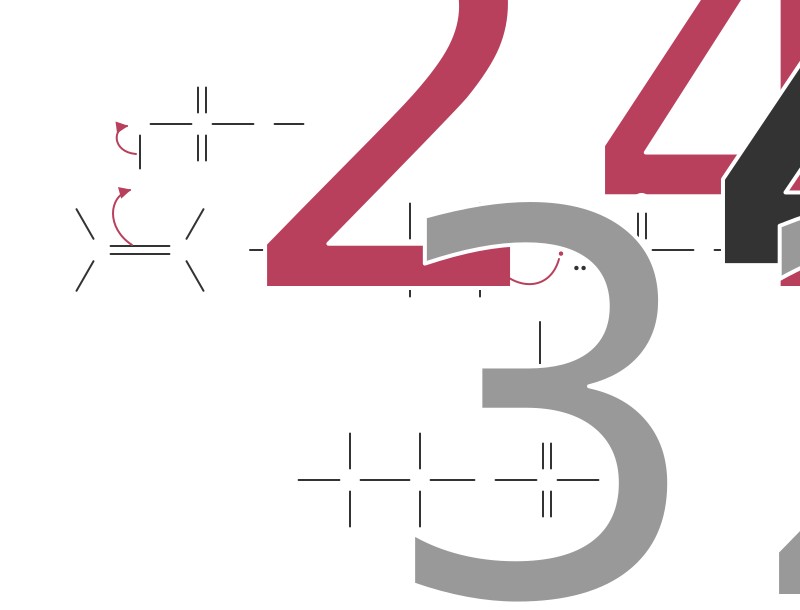
1. A curly arrow goes from the C=C to a δ+ H of H2SO4, and a curly arrow goes from that O–H bond to the O. The bond breaks heterolytically, giving a carbocation, CH3CH2+, and a hydrogensulfate ion, HSO4–.
2. A lone pair on the negatively charged O of HSO4– bonds to the positive carbon.
Making ethanol. If water is then added and the mixture is warmed, ethyl hydrogensulfate is hydrolysed to ethanol:
The sulfuric acid used in the first step is re-formed in the second, so overall it acts as a catalyst: the net change is ethene + water → ethanol.
Any alkene reacts in this way to give an alkyl hydrogensulfate and then an alcohol. For asymmetrical alkenes there is a major and a minor product, covered in the next lesson.