 BRAINCAKE
Asymmetrical Alkenes
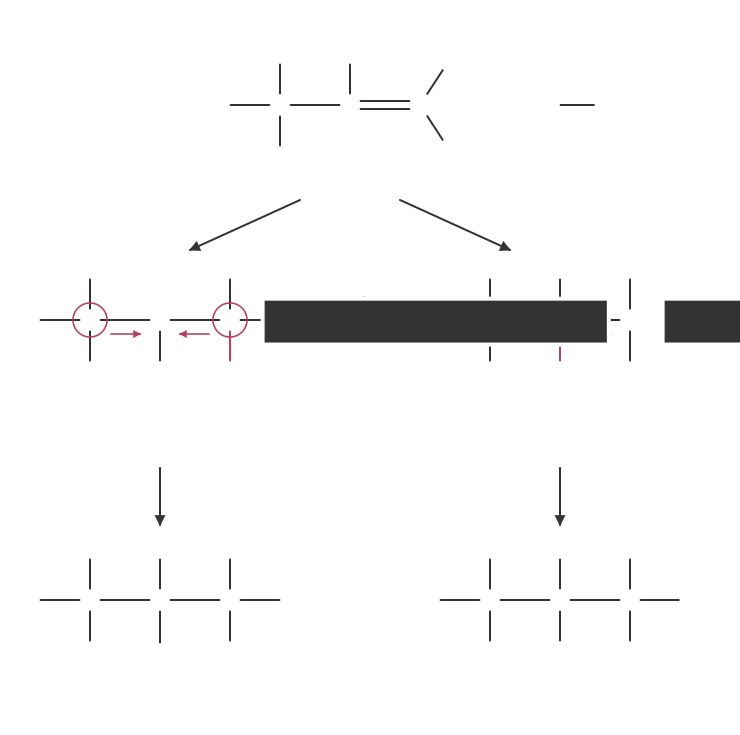
An asymmetrical (unsymmetrical) alkene has different groups on the two carbons of the C=C, such as propene, CH3CH=CH2. When it reacts with HBr, the H can add to either carbon, so two products are possible: a major product and a minor product.
The product depends on which carbocation forms in step 1:
• H adds to carbon 1: the positive charge is on carbon 2, which is bonded to two other carbons. This is a secondary carbocation, CH3CH+CH3. Br– then gives 2-bromopropane.
• H adds to carbon 2: the positive charge is on carbon 1, bonded to only one other carbon. This is a primary carbocation, CH3CH2CH2+, which gives 1-bromopropane.
Sign in free to see the rest of this lesson, the R.E.C.I.P.E. recall steps and the quiz
BrainCake is free. Make an account in seconds and pick up where this page stops.
Key terms in this lesson
- carbocation
- A positively charged carbon atom formed as a reactive intermediate when a bond breaks heterolytically.
More in Alkenes
- Electrophiles
- Electrophilic Addition
- Reaction with Halogens
- Reaction with Hydrogen Halides
- Reaction of Alkenes with Halogens
- Reaction with COncnetrated Sulfuric Acid
- Asymmetrical Alkenes
- Reaction with Water
All 23 lessons in Alkenes · All AQA AS-level Chemistry topics