 BRAINCAKE
Calculating the pH of a Strong Base
The strength of a base is its ability to dissociate and generate OH- ions in solution. Strong bases are alkalis. They dissociate completely to give hydroxide ions and cations. For example, sodium hydroxide is a strong base.
NaOH(aq) → Na+(aq) + OH-(aq)
Sign in free to see the rest of this lesson, the R.E.C.I.P.E. recall steps and the quiz
BrainCake is free. Make an account in seconds and pick up where this page stops.
Key terms in this lesson
- pH
- A measure of the hydrogen ion concentration of a solution, defined as pH = -log10[H+].
- ionic product of water Kw
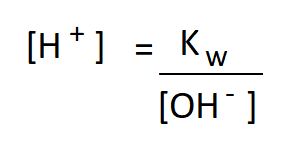
- The equilibrium constant for the dissociation of water, Kw = [H+][OH-], equal to 1.0 x 10^-14 mol2dm-6 at 25 degrees C.
More in Acids, Bases and Buffers
- pH
- Calculating the pH of a Strong Acid
- Calculating the pH of a Weak Acid
- The Ionic Product of Water Kw
- Buffer Solutions
- pH of a Buffer Solution
- Controlling the pH of Blood
- Titration Curves
All 15 lessons in Acids, Bases and Buffers · All OCR A-level Chemistry topics