 BRAINCAKE
Mechanism of Friedel-Crafts Acylation
Friedel-Crafts acylation follows the electrophilic substitution mechanism. The electrophile is formed with the help of the aluminium chloride catalyst.
Forming the electrophile. AlCl3 accepts a lone pair from the chlorine of the acyl chloride and removes it as AlCl4−. This leaves RCO+, an acylium ion. For ethanoyl chloride:
CH3COCl + AlCl3 → CH3CO+ + AlCl4−
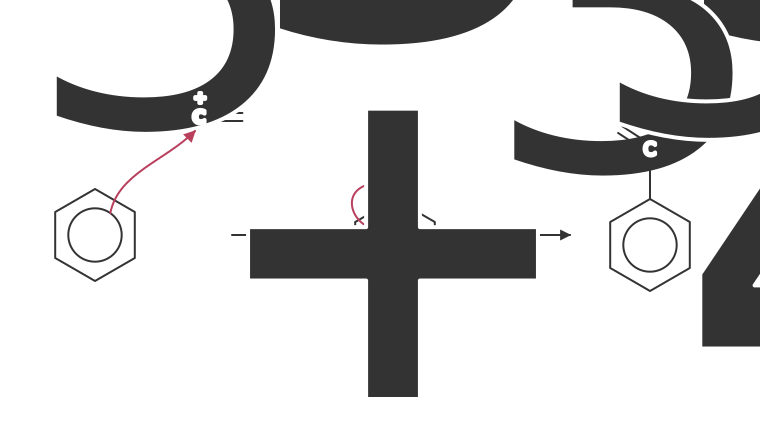
Sign in free to see the rest of this lesson, the R.E.C.I.P.E. recall steps and the quiz
BrainCake is free. Make an account in seconds and pick up where this page stops.
More in Aromatic Chemistry
- The Delocalised Model of Benzene
- Evidence for Delocalisation - Enthalpy of Hydrogenation
- Naming Aromatic Compounds
- Electrophilic Substitution
- Nitration of Benzene
- Mechanism of Nitration
- Uses of Nitration
- Friedel-Crafts Acylation
All 11 lessons in Aromatic Chemistry · All AQA A-level Chemistry topics