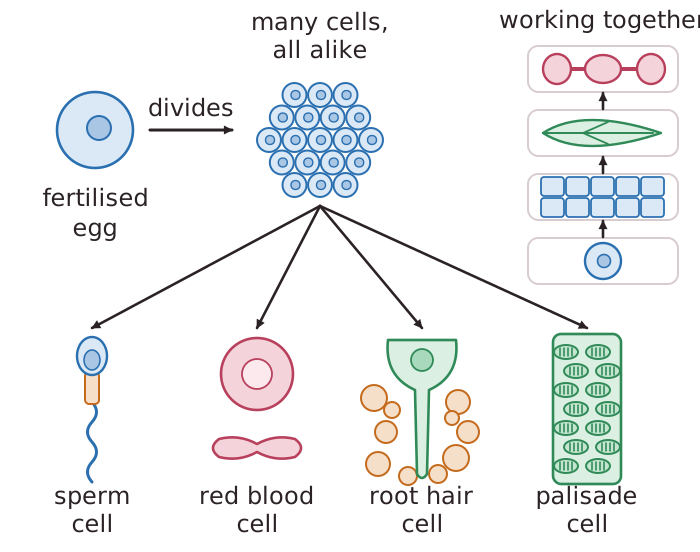
A fertilised egg divides by mitosis to make many cells that are all alike at first. As an organism develops, most of these cells change and become specialised. This change is called differentiation. A specialised cell has a structure that suits its job.
Differentiation matters because specialised cells do their jobs better than cells that try to do everything. This lets a multicellular organism work more efficiently, as different cells, tissues and organs can each carry out one function well. Cells that work together form tissues, tissues form organs and organs form organ systems.
There are many examples. A sperm cell has a tail to swim to the egg. A red blood cell has no nucleus, which leaves more room to carry oxygen. A root hair cell has a long thin extension that gives a large surface area to take in water and mineral ions. A palisade cell is packed with chloroplasts for photosynthesis in the leaf.