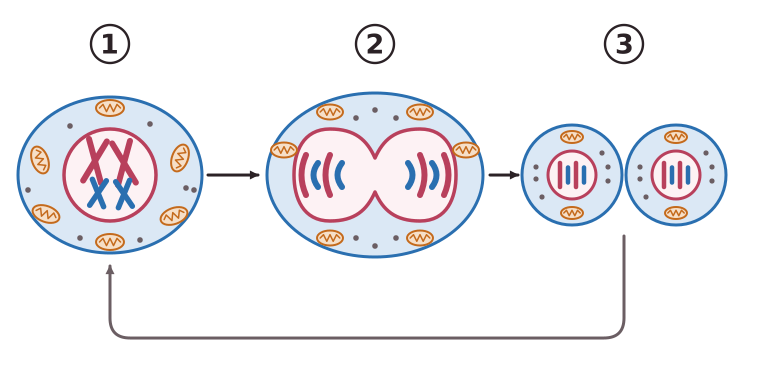
Multicellular organisms grow by making more cells. New cells are made by mitosis, which is one part of the cell cycle. Mitosis also replaces damaged cells in repair.
The cell cycle has these stages. First the cell grows, increasing the number of organelles such as mitochondria and ribosomes. Next the cell makes a copy of its DNA, which is called DNA replication. The cell then grows more and prepares to divide. Finally, during mitosis, the chromosomes are pulled apart so that one full set of chromosomes moves to each end of the cell. The cell then divides into two.
Mitosis produces two daughter cells. Each has the same number of chromosomes as the parent cell and the same genetic information, so the daughter cells are genetically identical to the parent cell. These cells can then grow and the cycle begins again.
In root tip cells stained and viewed with a light microscope, cells can be seen at different stages of mitosis. Most cells are not dividing at any one moment, because most of the cell cycle is spent in growth and DNA replication.