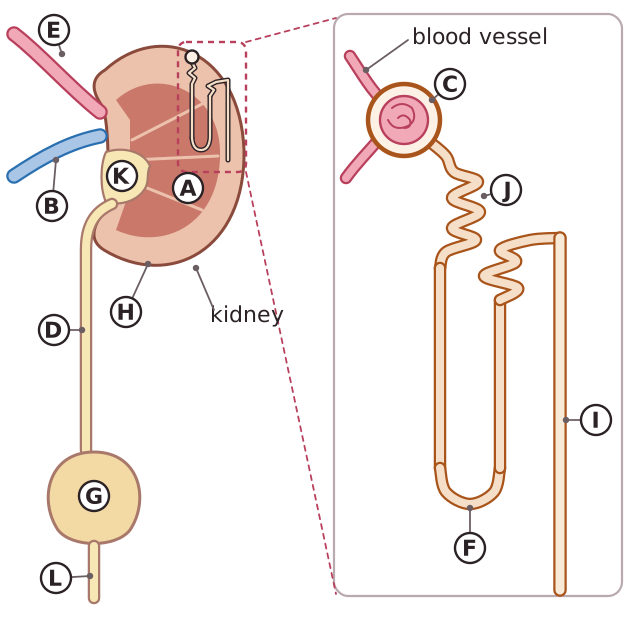
Blood reaches each kidney in the renal artery, which brings blood containing urea, and leaves in the renal vein. The kidney has an outer layer called the cortex and an inner part called the medulla. Urine collects in the pelvis, drains down the ureter to the bladder, and leaves the body through the urethra.
Each kidney contains many tiny tubules, also called nephrons. Each one starts with the Bowman’s capsule, a cup that surrounds a knot of capillaries. Blood is filtered here: water, glucose, urea and ions are forced out into the tubule, but blood cells and large proteins stay in the blood.
The filtrate then passes through the proximal convoluted tubule, a coiled section where all the glucose is reabsorbed into the blood, along with some water and ions. Next it flows through the loop of Henlé, which dips down into the medulla, where more water and ions are reabsorbed. Finally it enters the collecting duct, which carries urine towards the pelvis.