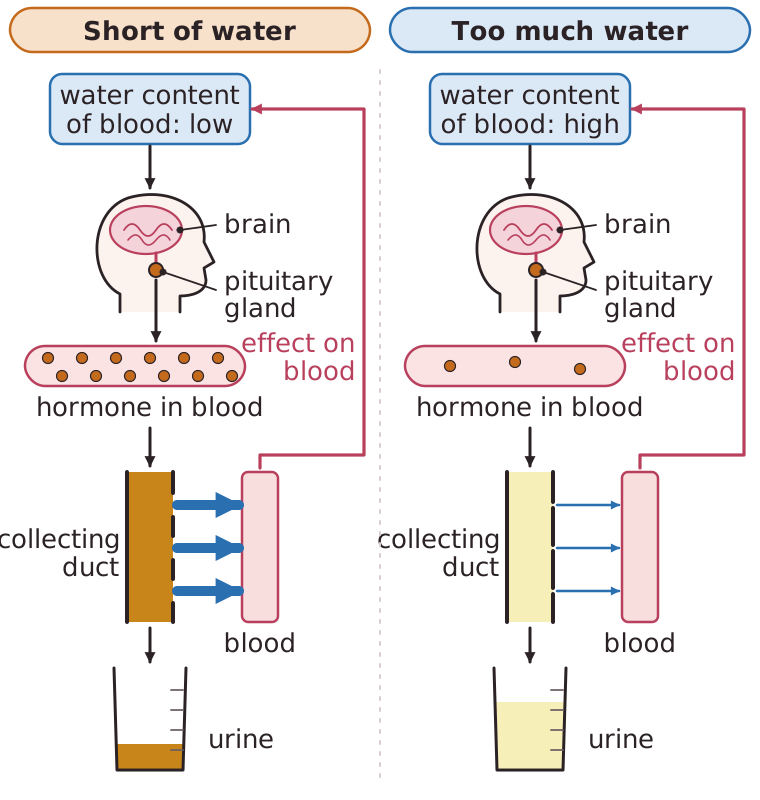
ADH is a hormone released into the blood by the pituitary gland. It controls how much water is reabsorbed from the kidney tubules. It does this by changing the permeability of the walls of the collecting duct, which is how easily water can pass through them.
If the blood becomes too concentrated, because the body is short of water, the brain detects the change and the pituitary gland releases more ADH. The collecting duct becomes more permeable to water, so more water is reabsorbed into the blood. The body then makes a small volume of concentrated urine.
If the blood becomes too dilute, for example after drinking a lot, less ADH is released. The collecting duct is less permeable, so less water is reabsorbed and a large volume of dilute urine is made.
This is negative feedback. A change in the water content of the blood causes a response that reverses the change, so the water content returns to normal.