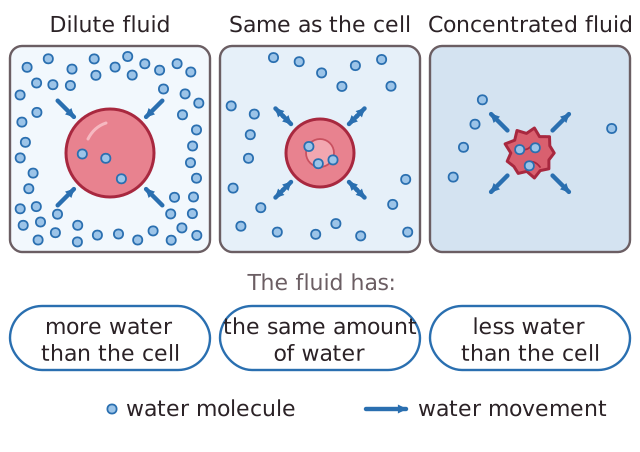
Cells in the body are surrounded by body fluids such as blood plasma and tissue fluid. Water moves between these fluids and cells by osmosis. Osmosis is the movement of water from a region of higher water potential to a region of lower water potential through a partially permeable membrane. A dilute solution has a high water potential, and a concentrated solution has a low water potential.
If the body fluid and the cell have equal water potentials, there is no net movement of water and the cell stays the same size.
If the body fluid has a higher water potential than the cell, for example after drinking a large amount of water, water moves into the cell by osmosis. An animal cell has no cell wall, so it swells and may burst. This bursting is called lysis.
If the body fluid has a lower water potential than the cell, for example when a person is dehydrated or has taken in a lot of salt, water leaves the cell by osmosis and the cell shrinks. This is why the body must control the water potential of its fluids.