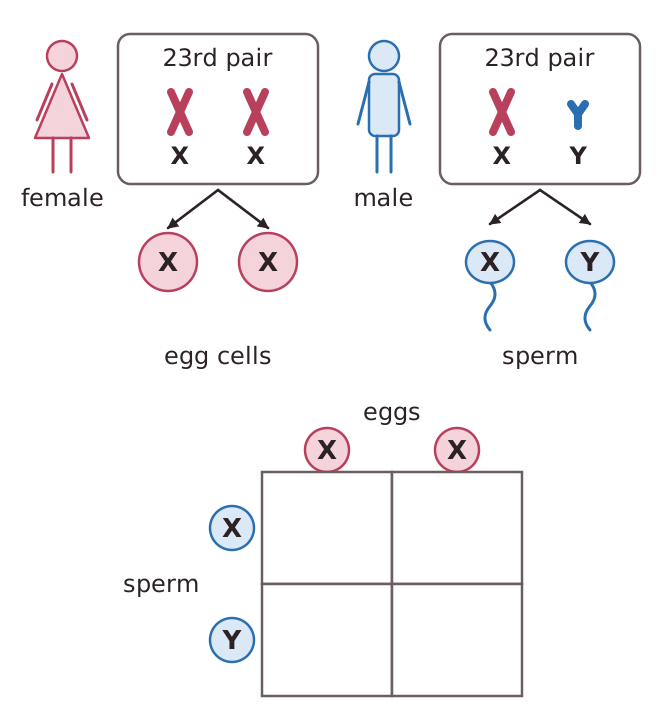
Human body cells have 23 pairs of chromosomes. Twenty-two pairs are the same in males and females. The 23rd pair is the pair of sex chromosomes, which decide whether a person is male or female. Females have two X chromosomes (XX) and males have one X and one Y chromosome (XY). The Y chromosome carries a gene that makes the embryo develop testes.
When gametes are made by meiosis, the pair of sex chromosomes separates. Every egg carries an X chromosome. Half of the sperm carry an X chromosome and half carry a Y chromosome. Writing the egg gametes on one side and the sperm gametes on the other gives a Punnett square with the boxes XX, XX, XY and XY. Two boxes in four are female and two in four are male, so the probability of each is 50% and the ratio of females to males is 1 to 1.
The sex of a child is decided by which sperm fertilises the egg. An X sperm gives a girl and a Y sperm gives a boy. Each fertilisation is a separate chance, so even a family with three girls still has a 50% chance that the next child is a boy.