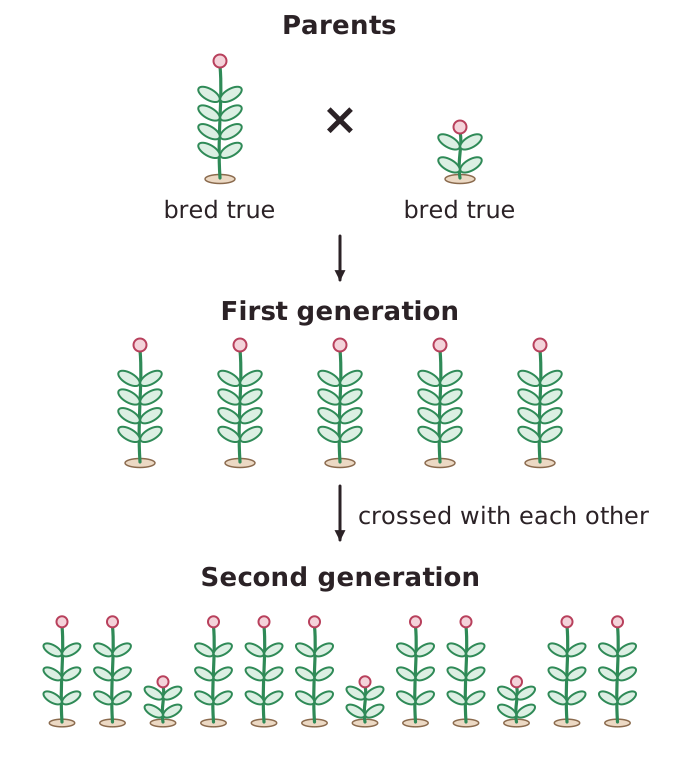
Gregor Mendel was a monk who worked in a monastery garden in the 1850s and 1860s. At that time nobody knew about genes, chromosomes or DNA. Mendel bred pea plants and studied features that came in two clear forms, such as tall or dwarf plants and round or wrinkled seeds. He chose peas because they grow quickly, produce many offspring and can be cross-pollinated by hand.
Mendel crossed plants with different forms of a feature and counted the offspring from every cross, over thousands of plants. He saw patterns. When he crossed a tall plant with a dwarf plant that always bred true, all the offspring were tall. When he crossed those offspring with each other, about three quarters were tall and about one quarter were dwarf. He concluded that features are controlled by separate units, which he called factors. Each parent passes on one factor for each feature, and one form can hide the other. We now call these factors genes, and the forms dominant and recessive.
Mendel published his results in 1866, but other scientists did not accept his ideas. They could not see what the factors were, and few understood his mathematical approach. His work was ignored for about 35 years. After he died, scientists observed chromosomes and watched them being shared out during cell division. Around 1900 they realised that chromosomes behave exactly as Mendel's factors do, so his work was rediscovered and accepted. Later, in 1953, the structure of DNA was worked out, and scientists could finally explain how genes carry information.