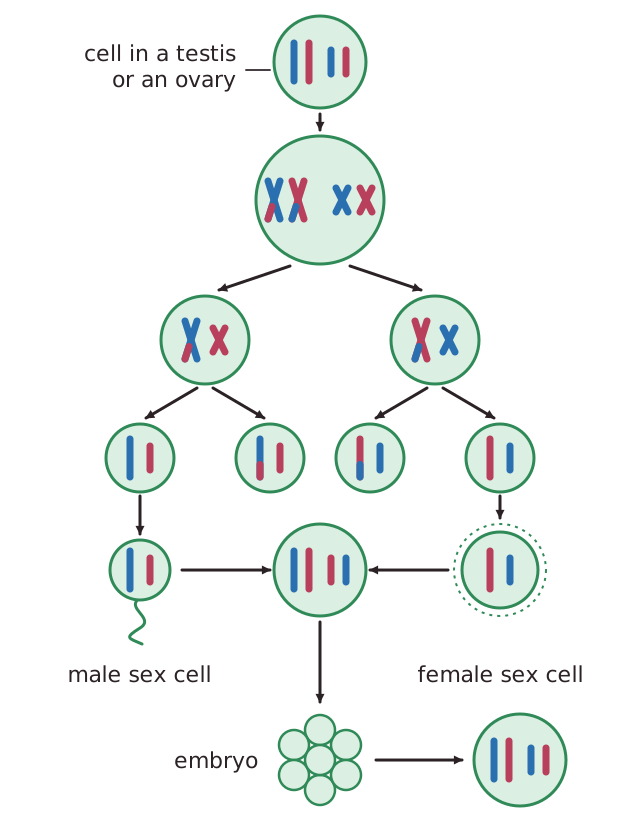
Human body cells contain chromosomes in pairs. A cell with two complete sets of chromosomes is diploid. In humans a diploid cell has 46 chromosomes, arranged as 23 pairs. One chromosome in each pair came from the mother and one from the father, so the two chromosomes in a pair carry the same genes in the same places, although they may carry different alleles.
A cell with only one set of chromosomes is haploid. Human gametes (sperm and egg cells) are haploid, so each has 23 chromosomes, one from each pair. Most other body cells, such as skin and muscle cells, are diploid.
When a sperm fuses with an egg at fertilisation, the two haploid nuclei join. The fertilised egg, called a zygote, has 23 + 23 = 46 chromosomes, so it is diploid again.