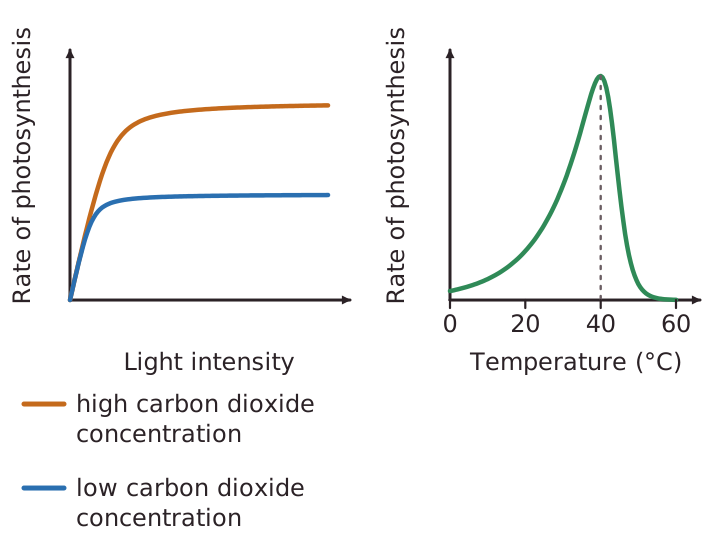
At any moment, the rate of photosynthesis is set by the factor that is in shortest supply. This is the limiting factor. Light intensity, carbon dioxide concentration and temperature can each be limiting. Raising the limiting factor increases the rate. Raising a factor that is not limiting makes no difference.
On a graph of rate against light intensity, the rising part shows that light is the limiting factor. The flat part, called the plateau, shows that another factor, such as carbon dioxide or temperature, is now limiting. A second curve at a higher carbon dioxide concentration reaches a higher plateau, which shows that carbon dioxide was limiting on the first curve. At low light the two curves overlap, because light is limiting for both.
A temperature graph is different. The rate rises to an optimum, then falls as enzymes denature, so a temperature that is too high can limit the rate. In bright light on a cold day, temperature may be the limiting factor in a greenhouse, but at night, light is limiting and adding carbon dioxide makes no difference.
Moving a lamp away changes light intensity by the inverse square law: intensity is proportional to 1 ÷ distance2. Doubling the distance from 10 cm to 20 cm makes the light intensity fall to one quarter.