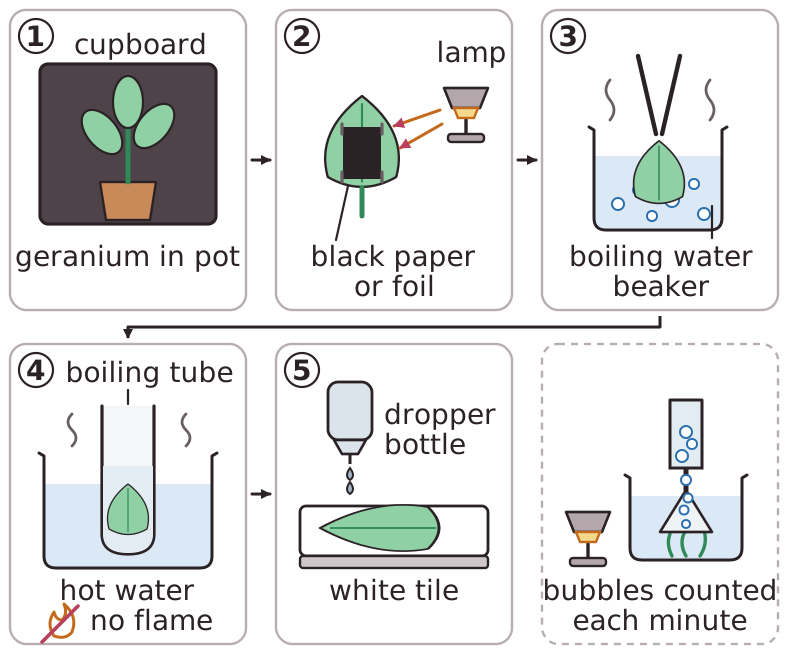
Plants store the glucose they make as starch, so a leaf that has been photosynthesising contains starch. To show that light is needed, first destarch a plant such as a geranium by keeping it in the dark for a day or two. Then cover part of a leaf with black paper or foil, so light is excluded from that area, and leave the plant in bright light for several hours.
Next, test the leaf for starch. Dip it in boiling water, which kills it and stops its reactions. Warm it in hot ethanol in a water bath to remove the chlorophyll. Ethanol is flammable, so use hot water from a kettle, not a naked flame. Rinse the leaf in water, then add iodine solution. Iodine turns blue-black where starch is present and stays orange-brown where there is no starch.
The covered area stays orange-brown because no light reached it, so no photosynthesis happened there. The uncovered area turns blue-black. Oxygen can also be collected. Pondweed such as Cabomba in bright light gives off bubbles of oxygen, which relights a glowing splint, and counting the bubbles per minute gives a measure of the rate of photosynthesis.