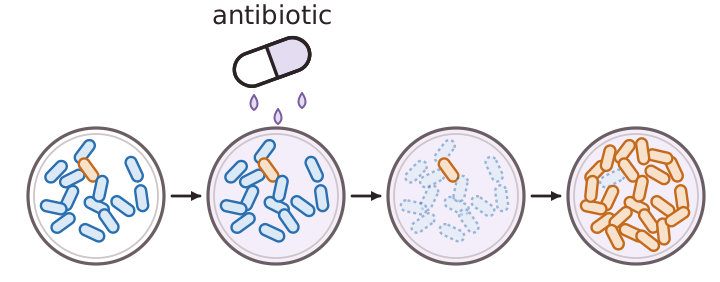
Bacteria reproduce very quickly, so changes in a population can be seen in a short time. This makes them a good example of natural selection happening today.
A random mutation in a bacterium can make it resistant to an antibiotic. At first, resistant bacteria are rare. When the antibiotic is used, the non-resistant bacteria are killed but the resistant ones survive and reproduce. They pass the resistance gene to their offspring, so the population becomes mostly resistant. MRSA is a well-known example.
This supports Darwin's theory: there is variation, the antibiotic is a selection pressure, and the survivors pass on their alleles. To slow the spread of resistance, doctors avoid prescribing antibiotics unnecessarily and patients should finish the whole course.