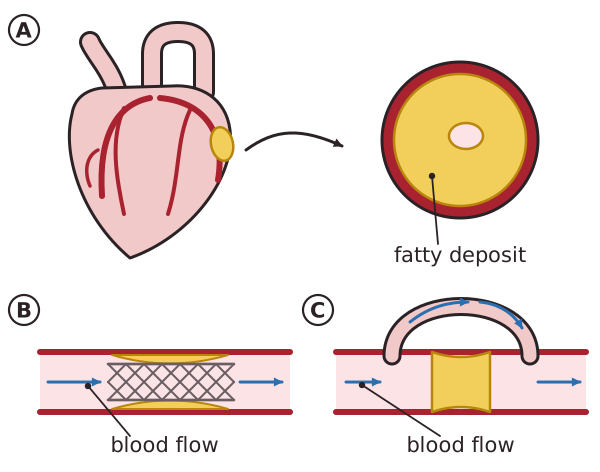
Treatments for cardiovascular disease can be compared by how well they work, their risks, their cost and how long they last. Life-long medication includes statins, which lower the level of cholesterol in the blood, drugs that lower blood pressure, and anticoagulants, which make the blood less likely to form clots. They are cheap and effective at reducing the risk of a heart attack or stroke, but they must be taken every day for life and may cause side effects, for example anticoagulants can cause bleeding.
Surgical procedures can act quickly. A stent is a wire mesh tube placed in a narrowed coronary artery and expanded to hold it open. A bypass uses a blood vessel from elsewhere in the body to carry blood around a blockage, a faulty heart valve can be replaced, and a damaged heart can be replaced by a transplant. The effect is fast, but surgery is expensive and carries risks such as infection, bleeding and a reaction to the anaesthetic, and a transplant may be rejected by the body or need a donor who may not be available.
Lifestyle changes include stopping smoking, eating a balanced diet with less fat and salt, taking regular exercise and drinking less alcohol. They are cheap, have no side effects and help to prevent disease, but they work slowly, need a lot of willpower, and may not be enough when the arteries are already badly blocked. In practice, patients often have a combination of treatments.