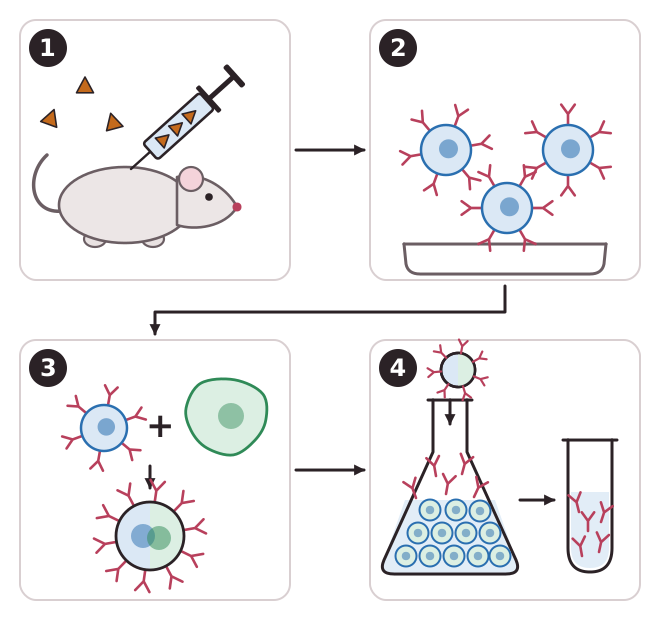
Antibodies are made by white blood cells called lymphocytes. Each lymphocyte makes just one type of antibody, which fits one specific antigen. A monoclonal antibody is an antibody that is made in large amounts, with every molecule identical, because all of them come from one clone of cells.
First, a mouse is injected with the antigen you want to target. Its lymphocytes that make the matching antibody are collected. These lymphocytes make exactly the antibody that is wanted, but they do not divide, so on their own they cannot produce much.
To solve this, each lymphocyte is fused with a tumour cell. Tumour cells divide again and again. The new cell is a hybridoma cell. It gets the ability to make the desired antibody from the lymphocyte and the ability to divide from the tumour cell.
Hybridoma cells are selected and grown in large numbers. As they divide, they produce the antibody continuously. The identical antibodies are then collected and purified.