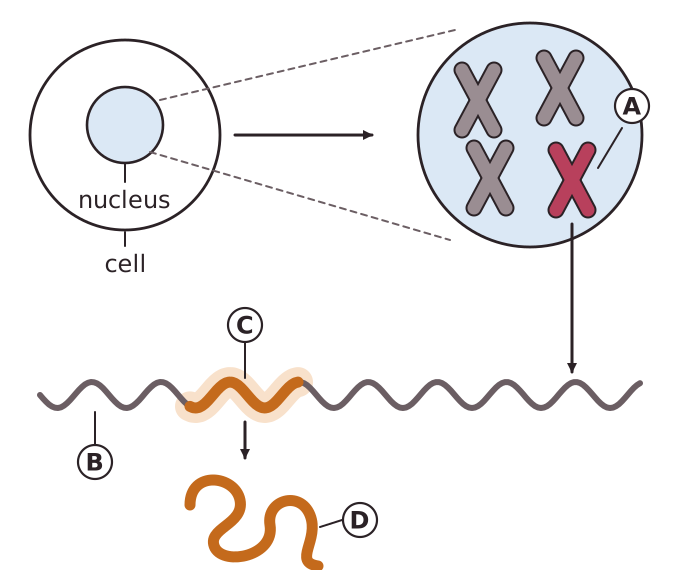
The genome of an organism is all of its DNA. Every cell nucleus in your body contains a copy of your whole genome, arranged in long molecules called chromosomes.
A gene is a section of a DNA molecule that codes for a specific protein. Each chromosome carries many genes along its length, so a genome contains a very large number of genes. The genome also includes DNA that does not code for a protein.
Proteins do many jobs in living things. Enzymes are proteins that speed up reactions, and some hormones and structural parts of cells are proteins too. The genes in a cell decide which proteins the cell is able to make. If a gene is damaged, the cell may not be able to make the protein it codes for.