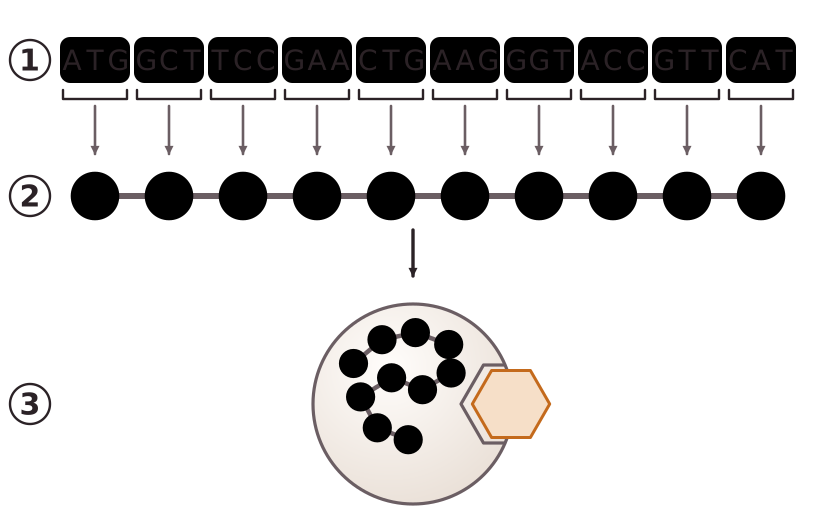
A gene is a section of DNA, and its code is the order of its bases (A, T, C and G). The cell reads the bases in groups of three called a triplet. Each triplet codes for one amino acid, so the order of the bases decides which amino acids are used and the order they are joined in. For example, a gene section of 30 bases codes for 10 amino acids.
Amino acids are joined into a chain called a polypeptide. Different amino acids attract and repel each other in different ways, so the chain does not stay straight. It folds up into a particular three-dimensional shape. The order of amino acids decides how the chain folds, so a different order gives a different shape.
The shape of a protein decides what it can do. An enzyme is a protein folded so that it has an active site, and only a substrate with a matching shape fits into it. If the shape of the protein is wrong, it cannot do its job.