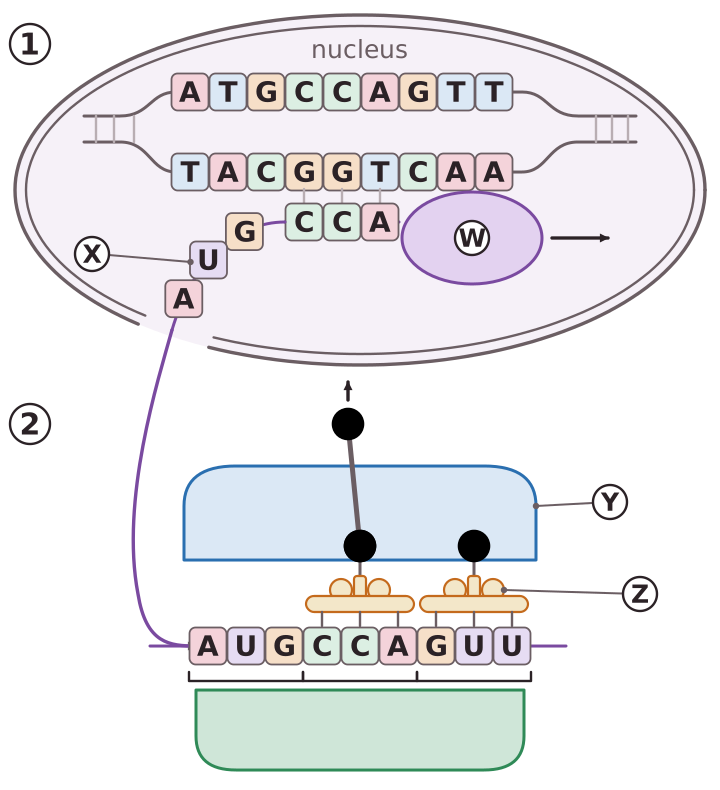
Protein synthesis has two stages. DNA stays in the nucleus, so the cell first makes a copy of the gene as a molecule called mRNA. This is transcription. Next, the mRNA is used to build the protein at a ribosome. This is translation.
In transcription, RNA polymerase binds to non-coding DNA in front of the gene. It then moves along the gene and uses the coding DNA as a template to make a complementary mRNA strand, with RNA bases pairing up with the DNA bases (RNA uses uracil in place of thymine). The mRNA then leaves the nucleus through a nuclear pore.
In translation, the mRNA attaches to a ribosome. The mRNA is read in groups of three bases called codons, and each codon codes for a specific amino acid. For example, 12 bases make 4 codons. Molecules of tRNA carry amino acids to the ribosome, and each tRNA fits the codon for the amino acid it carries. The ribosome links the amino acids together in order to form a polypeptide.