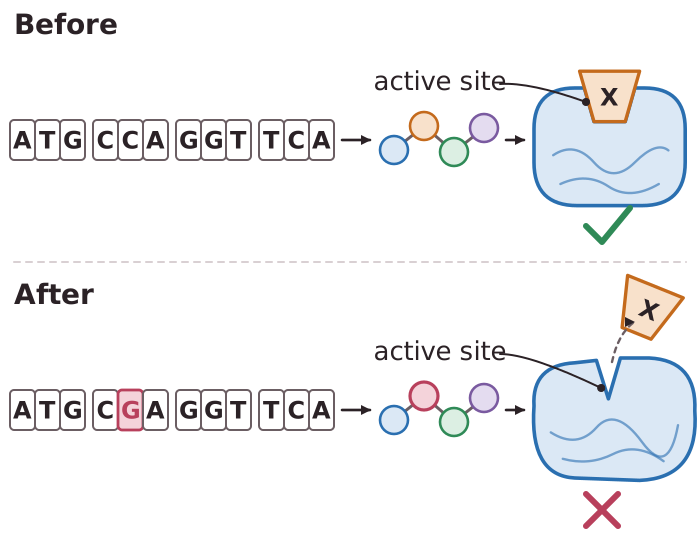
A mutation is a change in the DNA base sequence of a gene, but a change in DNA does not always change how an organism looks or works. The effect on the phenotype depends on where the mutation happens and what it does to the protein that the gene codes for.
Most genetic mutations have no effect on the phenotype. For example, the mutation may be in a part of the DNA that does not code for a protein, or the new base sequence may still produce a protein that works in the same way. Some mutations have a small effect on the phenotype, such as a slight change in how well a protein works, so the organism looks or behaves a little differently.
Rarely, a single mutation will significantly affect the phenotype. A changed base sequence can lead to a different shape of protein, for example an enzyme whose active site no longer fits its substrate. The enzyme then cannot do its job and the organism may have a clear new characteristic, such as a genetic disorder. Very occasionally a mutation like this gives an advantage in the environment, and it may then become more common in the population.