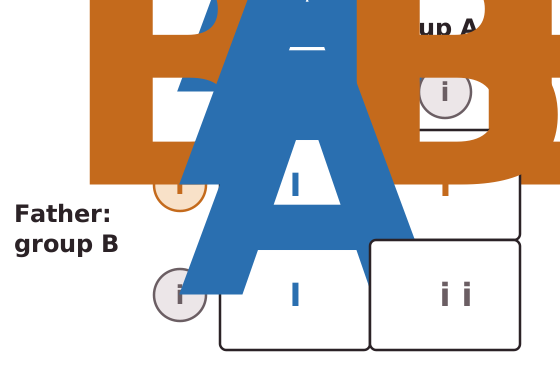
Most genes you meet at GCSE have two alleles, but the gene for the ABO blood group has three: IA, IB and i. A gene with more than two alleles is an example of multiple alleles. Each person still inherits only two of them, one from each parent.
The IA allele makes antigen A on the surface of red blood cells and the IB allele makes antigen B. The i allele makes no antigen. It is recessive to both of the others, so it is only seen when a person has two copies of it.
IA and IB are codominant. When both are present, both are fully expressed, so the red blood cells carry antigen A and antigen B and the person is blood group AB. Neither allele hides the other.
The genotypes give four phenotypes. IAIA or IAi gives group A. IBIB or IBi gives group B. IAIB gives group AB. ii gives group O. Two parents with groups A and B can have a group O child if both are heterozygous (IAi and IBi). Each child then has a 25% chance of each of the four groups.