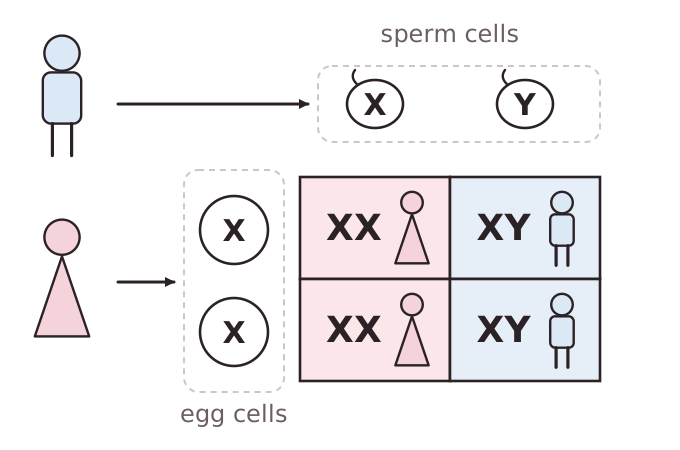
Human body cells contain 23 pairs of chromosomes. One pair is the sex chromosomes, which decide whether a person is male or female. A female has two X chromosomes (XX). A male has one X and one Y chromosome (XY).
Gametes contain only one chromosome from each pair. Every egg cell carries an X chromosome, because the female is XX. Sperm cells carry either an X or a Y chromosome, because the male is XY, and the two types are made in equal numbers.
The sex of the baby is decided at fertilisation by which sperm reaches the egg. If an X sperm fertilises the egg, the zygote is XX and the baby is a girl. If a Y sperm fertilises the egg, the zygote is XY and the baby is a boy. A Punnett square for XX x XY gives XX, XX, XY and XY, so the ratio of girls to boys is 1:1. The probability of each sex is 50% every time, and earlier children make no difference to the next one.