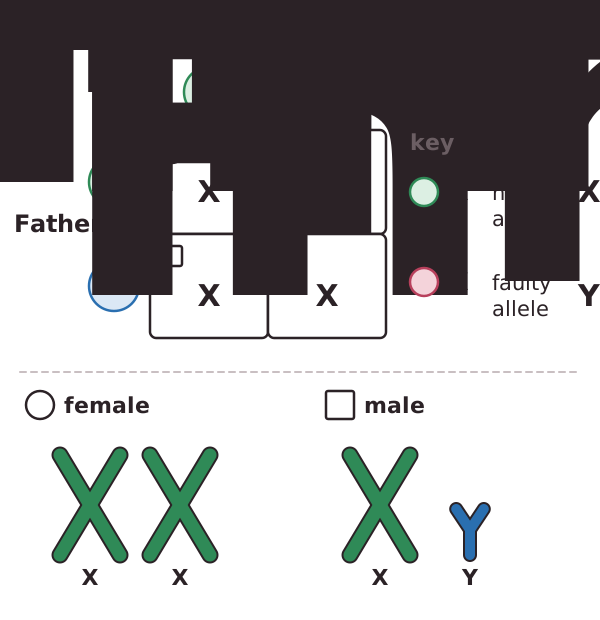
Humans have 23 pairs of chromosomes. One pair decides sex: females are XX and males are XY. The X chromosome is much larger than the Y and carries many genes that the Y chromosome does not have. A gene on the X chromosome is sex-linked, and its pattern of inheritance is different in males and females. Red-green colour blindness and haemophilia are examples caused by a recessive allele on the X chromosome.
Take haemophilia, with the normal allele written XH and the faulty recessive allele Xh. A male has only one X chromosome, so he has only one allele for the gene. If it is the faulty allele, he is affected, because there is no second allele to mask it. A female has two X chromosomes. She is affected only if she has two copies of the faulty allele, XhXh. A female with XHXh is unaffected, but she is a carrier and can pass the allele on. This is why these disorders are more common in males.
A father always passes his Y chromosome to his sons and his X chromosome to his daughters. A son gets his only X chromosome from his mother. So a father cannot pass a sex-linked disorder to a son, but all his daughters receive his allele and become carriers if the mother has two normal alleles.
If a carrier mother (XHXh) has children with an unaffected father (XHY), each child has a 1 in 4 chance of each genotype. Half of the sons are expected to be affected, none of the daughters are affected, and half of the daughters are carriers.