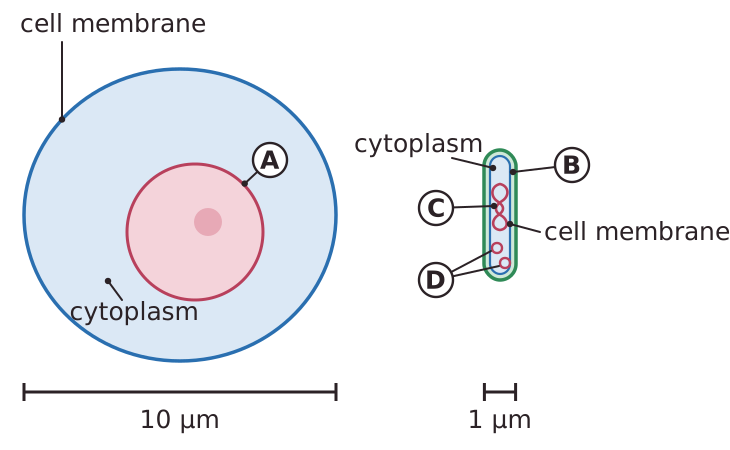
Plant and animal cells are eukaryotic cells. Each one has a cell membrane, cytoplasm and genetic material that is enclosed in a nucleus. The name eukaryote refers to this nucleus.
Bacterial cells are prokaryotic cells. They are much smaller than plant and animal cells. A bacterial cell has cytoplasm and a cell membrane, surrounded by a cell wall. Its genetic material is not enclosed in a nucleus. It is a single DNA loop lying in the cytoplasm, and there may also be one or more small rings of DNA called plasmids.
Cells are tiny, so we use small units. 1 millimetre (mm) is one thousandth of a metre. 1 micrometre (µm) is one thousandth of a millimetre, so 1 µm = 1 × 10⁻⁶ m. A typical animal cell is about 10 µm across and a typical bacterium is about 1 µm across. Dividing one size by the other tells you how many times wider the animal cell is. A difference of one power of ten is called one order of magnitude.