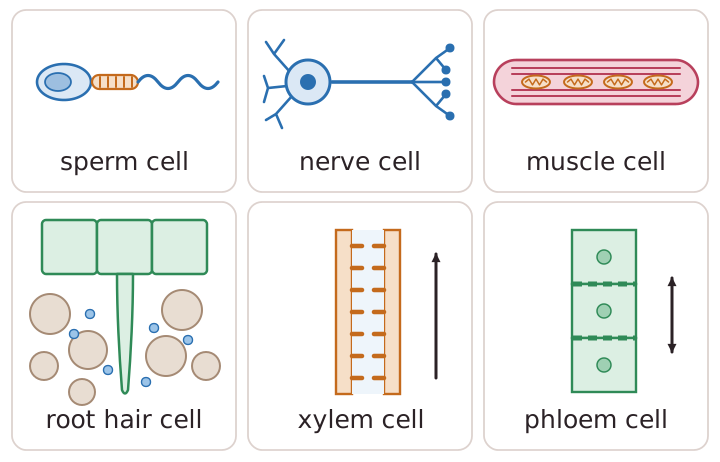
Cells may be specialised to carry out a particular function. The structure of a specialised cell is adapted to its job, and specialised cells work together in a tissue, an organ or an organ system to keep the whole organism alive.
- Sperm cell: a tail lets it swim to the egg, and many mitochondria release the energy for swimming.
- Nerve cell: it is long, so it can carry electrical impulses over a distance, and its branched ends connect to other nerve cells.
- Muscle cell: it contains protein fibres that contract to shorten the muscle, and many mitochondria release the energy for this.
- Root hair cell: a long, hair-like extension gives a large surface area for absorbing water and mineral ions from the soil.
- Xylem cell: dead cells joined end to end form hollow tubes, strengthened with lignin, that carry water and mineral ions from the roots up to the leaves.
- Phloem cell: living cells joined end to end, with pores in their end walls so that dissolved sugars can move through.
In an exam you may be given a cell you have not met. Look for the feature, such as a tail, a long shape or many mitochondria, and link it to the job the cell does.