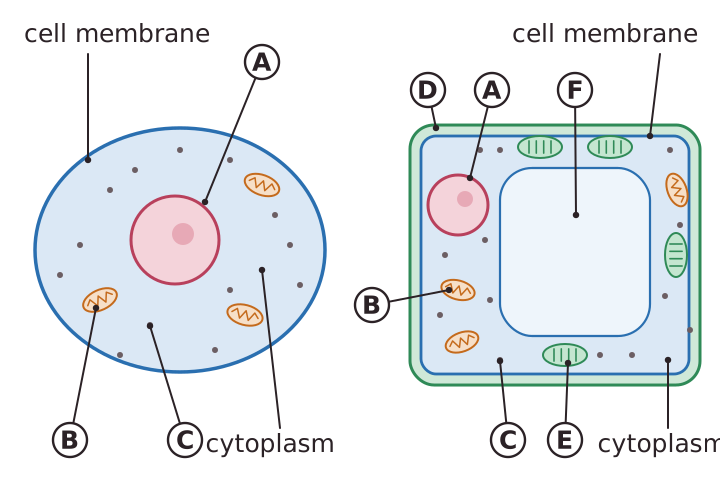
Most animal cells have a nucleus, cytoplasm, a cell membrane, mitochondria and ribosomes. Each part has a job. The nucleus contains the genetic material and controls the activities of the cell. Most chemical reactions happen in the cytoplasm. The cell membrane controls what moves into and out of the cell. Aerobic respiration takes place in the mitochondria, releasing energy, so cells that need a lot of energy, such as muscle cells, have many mitochondria. Ribosomes are where protein synthesis happens.
In addition to these parts, plant cells often have chloroplasts and a permanent vacuole filled with cell sap. Chloroplasts contain chlorophyll, which absorbs light for photosynthesis. The permanent vacuole helps to keep the cell firm. Plant and algal cells also have a cell wall made of cellulose, which strengthens the cell.
A bacterial cell has no nucleus, but it may have plasmids. A plasmid is a small ring of DNA that carries extra genes, for example a gene that makes the bacterium resistant to an antibiotic.
In the required practical you use a light microscope to observe, draw and label plant and animal cells. A stain such as iodine solution makes the parts easier to see, and your drawing must include a magnification scale. You can also estimate the relative size of a structure. If the nucleus looks about a third as wide as the whole cell, it is about a third of the cell's width.