Some organisms (extremophiles) are able to survive in extremely cold or extremely hot environments.The temperatures in deep oceans, polar regions or at high altitudes is extremely low and organisms living in these environments need to be adapted to the cold.Enzymes adapted to the cold have more flexible structures especially at the active site and they will denature at lower temperatures than enzymes that work in warmer environments as they are less stable.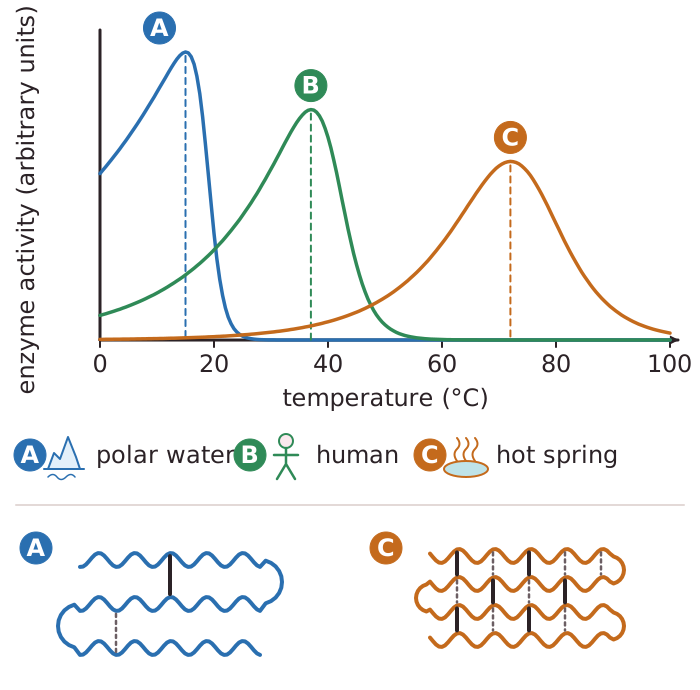 Thermophiles are organisms that live in very hot environments such as in hot springs and deep sea hydrothermal vents.The tertiary structures of the enzymes are more stable because of an increased number of hydrogen bonds and disulfide bridges.