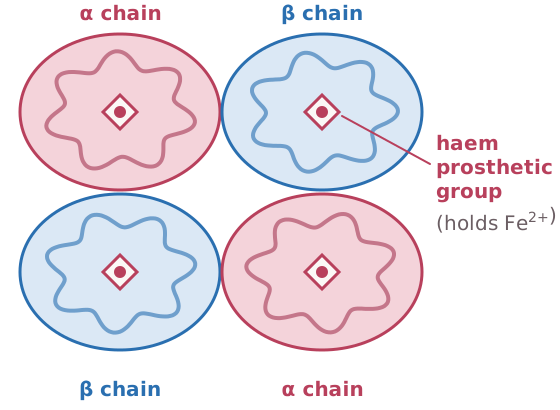
Prosthetic groups are non-protein cofactors that are permanently bound to proteins or enzymes and are needed for them to carry out their function.Metal ions and molecules derived from vitamins can form prosthetic groups.The enzyme carbonic anhydrase is attached to zinc ions. Carbonic anhydrase converts carbon dioxide to carbonic acid in red blood cells.Haem is the non-protein group attached to each of the alpha and beta subunits of the haemoglobin protein. The enzyme catalase also contains the haem group.Haem contains iron Fe2+.This allows it to bind molecular oxygen.