Meiosis is a type of nuclear division that halves the number of chromosomes during the formation of gametes and recombines genetic material from both parents to produce genetic variation in the offspring.Without the halving of the chromosome number during the formation of gametes the chromosome number would double each generation.Every cell has the diploid (2n) number of chromosomes apart from the gametes which are haploid(n). The diploid number is restored in the zygote during fertilisation. In humans all cells have 46 chromosomes(23 pairs) except egg and sperm cells which have 23 chromosomes.Mitosis produces two genetically identical daughter cells with the same number of chromosomes as each other and the parent cell.Meiosis produces four daughter cells each genetically different from the parent and each other.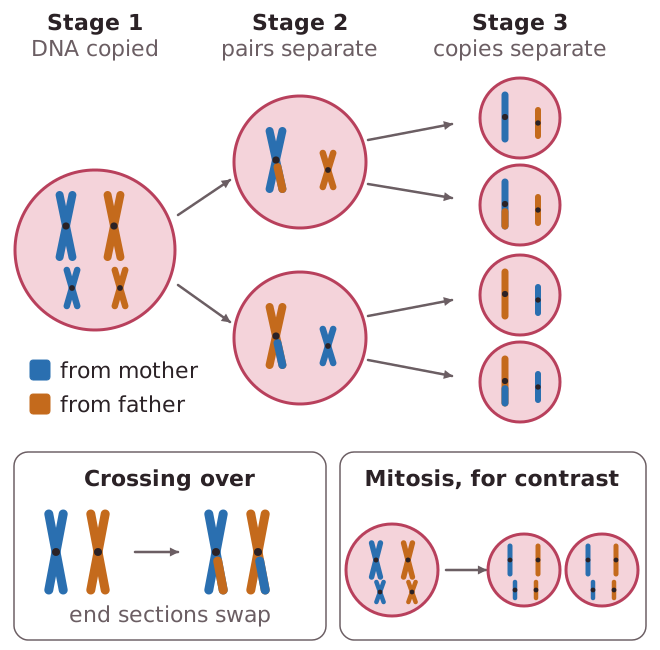 In some plants such as ferns, gametes are produced by mitosis and meiosis occurs in the formation of spores.