 BRAINCAKE
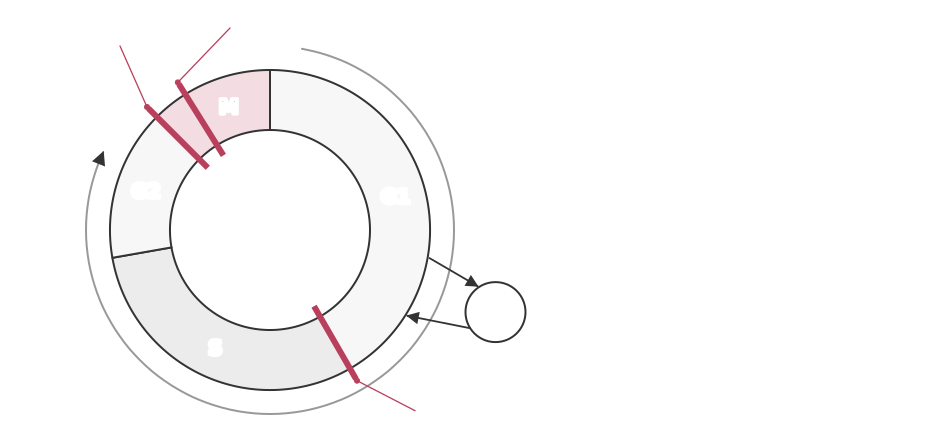
Control of the Cell Cycle
The cell can divide only if DNA replication is free of errors or has been repaired, if the cells have grown to the right size, if the chromosomes are in the right place during mitosis.
This way, two identical daughter cells are created and the daughter cells are identical to the parent cell.
Checkpoints control the cell cycle by verifying if the processes at each point of the cell cycle are complete and error free. If so the cell is allowed to proceed to the next stage.
Sign in free to see the rest of this lesson, the R.E.C.I.P.E. recall steps and the quiz
BrainCake is free. Make an account in seconds and pick up where this page stops.
Key terms in this lesson
- phosphorylation
- The addition of a phosphate group to a molecule, often used to activate it or transfer energy.
- mitosis
- Nuclear division producing two daughter nuclei that are genetically identical to the parent nucleus, used in growth, repair and asexual reproduction.
- centromere
- The region of a chromosome that joins two sister chromatids together and attaches to the spindle fibres.
- gene
- A length of DNA that codes for a specific polypeptide.
More in Cell Division
All 31 lessons in Cell Division · All OCR AS-level Biology topics