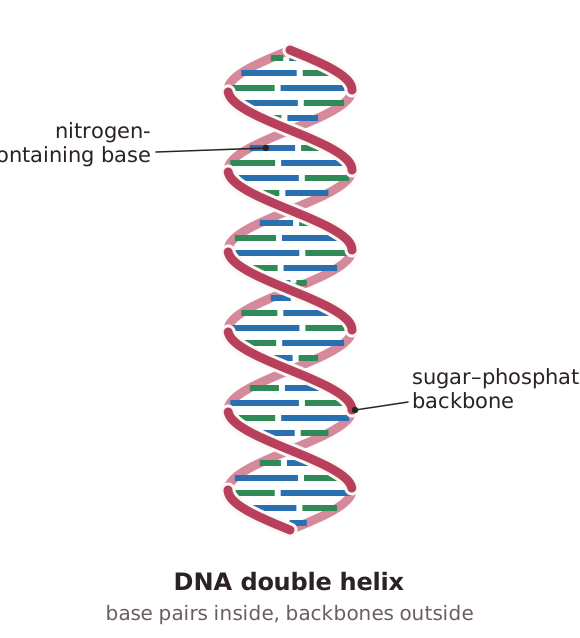
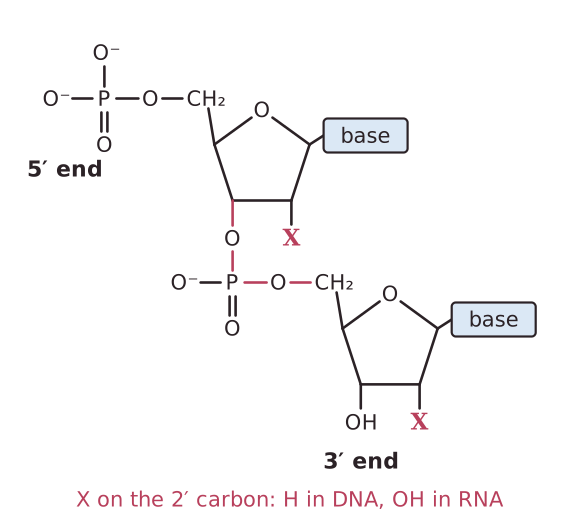
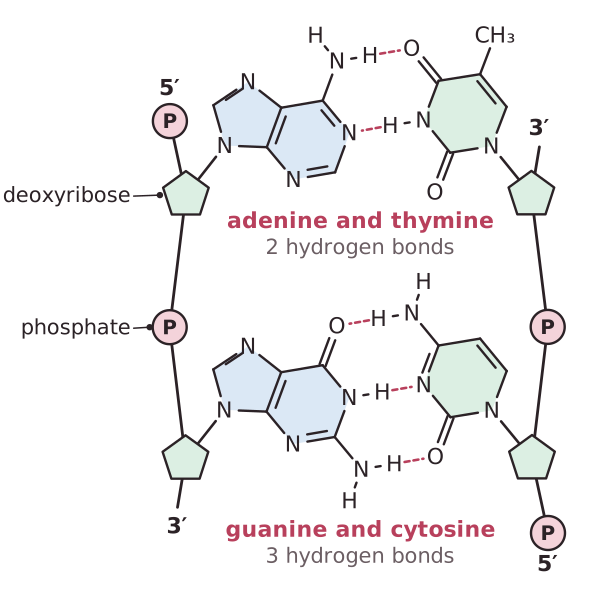
DNA is deoxyribonucleic acid. It is made of two long polynucleotide strands held together by hydrogen bonds between the bases.Each nucleotide is made of a molecule of deoxyribose sugar a phosphate group and a nitrogen-containing base. The four bases in DNA are adenine, guanine, cytosine and thymine (A, G, C and T).Each molecule of adenine always forms two hydrogen bonds with thymine on the other strand and cytosine always forms three hydrogen bonds with a guanine on the opposite strand. This is known as complementary base pairing.The two strands wind round each other to form a double helix with the bases pointing inwards and the deoxyribose and phosphate group forming a sugar-phosphate backbone.The two complementary strands of nucleotides run in opposite directions and are said to be antiparallel.