 BRAINCAKE
The Female Gamete
In mammals the female gamete released at ovulation is a secondary oocyte. It only completes meiosis II, and becomes a mature ovum, after a sperm enters it. It is often simply called the egg cell.
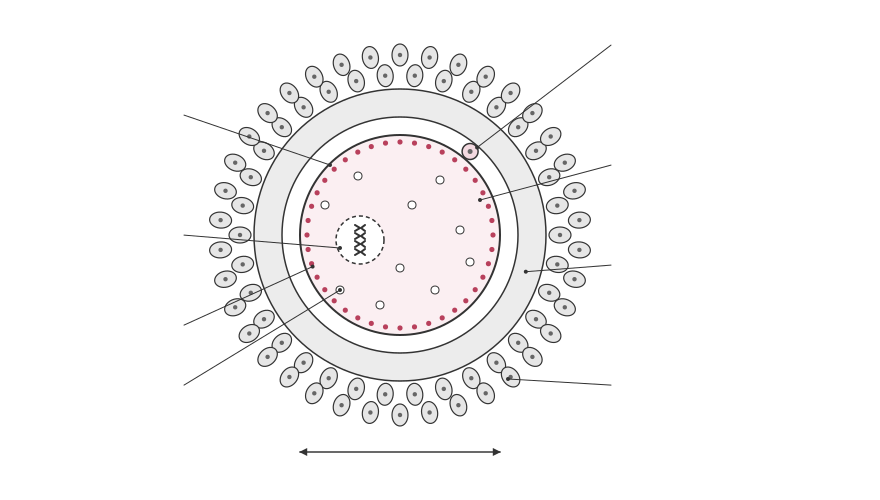
Its structure is adapted for fertilisation and early development:
• Haploid nucleus: contains one set of chromosomes (23 in humans), paused at metaphase II.
• Large cytoplasm containing food reserves such as lipid droplets and proteins, plus mitochondria and ribosomes, to support the early embryo before it implants in the uterus.
• Cortical granules: vesicles just beneath the cell surface membrane containing enzymes. After one sperm enters, they release their contents by exocytosis in the cortical reaction, which hardens the zona pellucida so no further sperm can enter.
Sign in free to see the rest of this lesson, the R.E.C.I.P.E. recall steps and the quiz
BrainCake is free. Make an account in seconds and pick up where this page stops.
Key terms in this lesson
- acrosome reaction
- The release of digestive enzymes from a sperm's acrosome when it binds to the zona pellucida, digesting a path towards the egg.
More in Meiosis and Sexual Reproduction
- Turner's Syndrome
- Spermatogenesis
- Oogenesis
- The Male Gamete
- Gametogenesis in Plants
- Formation of Pollen
- Formation of Plant Egg Cells
- Pollination
All 28 lessons in Meiosis and Sexual Reproduction · All Edexcel AS-level Biology topics