The female gamete of a flowering plant, the egg cell, forms inside an ovule in the ovary of the carpel. Each ovule contains a mass of tissue (the nucellus) surrounded by protective layers called integuments, which leave a small gap at one end, the micropyle.The stages are:
• One large diploid cell in the nucellus, the megaspore mother cell (2n), divides by meiosis to produce four haploid cells.
• Three of these degenerate. The one that survives, the megaspore (n), grows to form the embryo sac.
• The nucleus of the embryo sac divides by mitosis three times, giving 23 = 8 haploid nuclei.The eight nuclei are arranged in a typical pattern:
• at the micropyle end: the egg cell (the female gamete) with two synergids beside it;
• in the centre: two polar nuclei, which often fuse to form a diploid central nucleus;
• at the opposite end: three antipodal cells.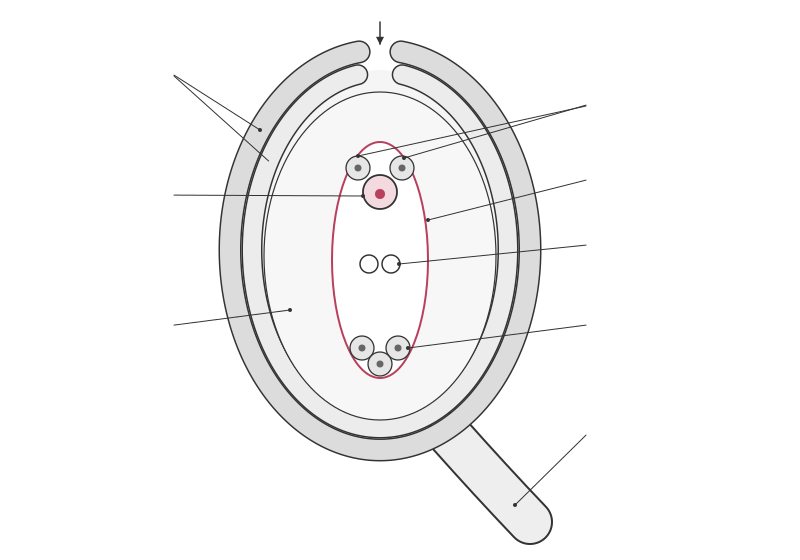
• One large diploid cell in the nucellus, the megaspore mother cell (2n), divides by meiosis to produce four haploid cells.
• Three of these degenerate. The one that survives, the megaspore (n), grows to form the embryo sac.
• The nucleus of the embryo sac divides by mitosis three times, giving 23 = 8 haploid nuclei.The eight nuclei are arranged in a typical pattern:
• at the micropyle end: the egg cell (the female gamete) with two synergids beside it;
• in the centre: two polar nuclei, which often fuse to form a diploid central nucleus;
• at the opposite end: three antipodal cells.