 BRAINCAKE
Endocytosis and Exocytosis
Some molecules and particles are far too large to pass through channel or carrier proteins. Cells move them in bulk inside membrane-bound vesicles. This is possible because the phospholipid bilayer is fluid, so membranes can fold, pinch off and fuse. Both processes need energy from ATP.
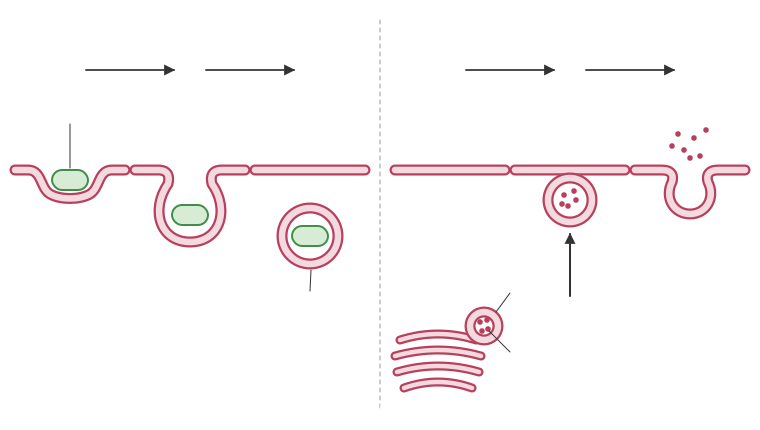
Endocytosis takes material into a cell:
1. The cell surface membrane folds inwards around the material.
2. The membrane surrounds it completely and fuses, pinching off a vesicle inside the cytoplasm.
There are two main types:
• phagocytosis ("cell eating"): uptake of solid particles, for example a phagocyte engulfing a bacterium. The vesicle may fuse with a lysosome, whose enzymes digest the contents;
Sign in free to see the rest of this lesson, the R.E.C.I.P.E. recall steps and the quiz
BrainCake is free. Make an account in seconds and pick up where this page stops.
More in Cell Transport Mechanisms
- Osmosis in Animal Cells
- Water Potential in Plant Cells
- Osmosis in Plant Cells
- Turgor Pressure (P)
- Osmotic Potential (π)
- Water Potential, Turgor Pressure and Osmotic Potential
- Active Transport
- Evidence for Active Transport
All 18 lessons in Cell Transport Mechanisms · All Edexcel AS-level Biology topics