 BRAINCAKE
ATP
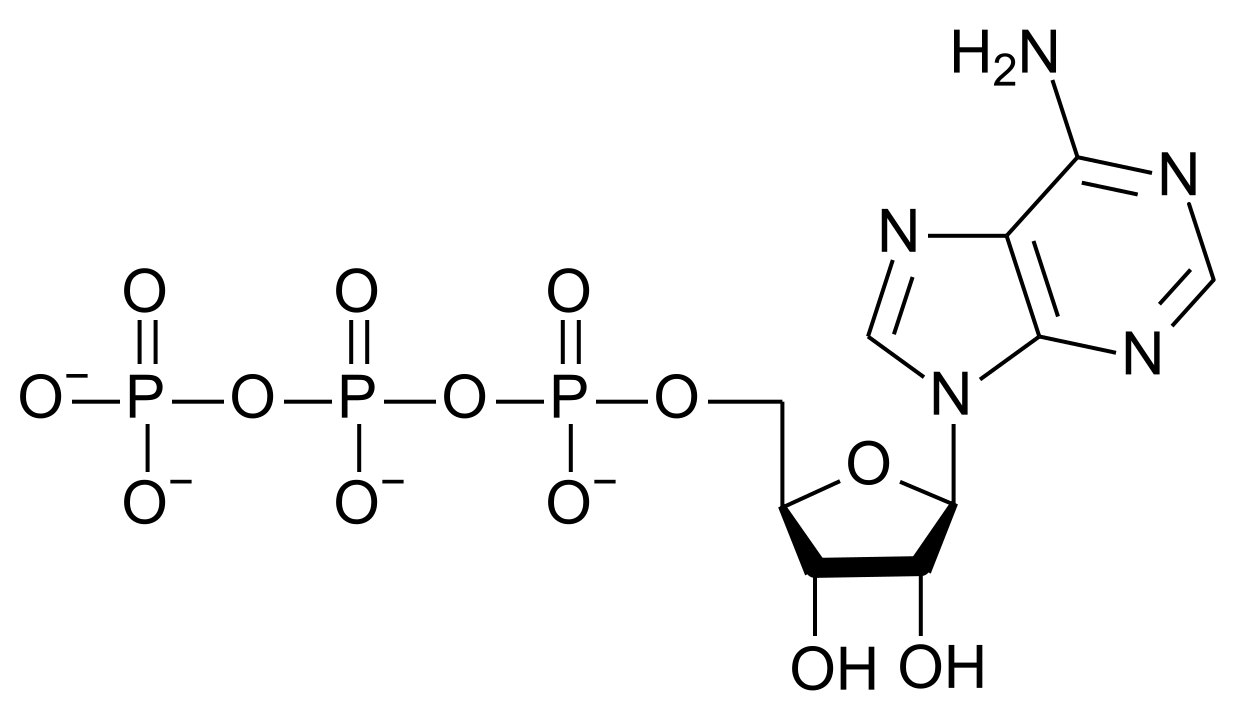
ATP is adenosine triphosphate.
It is a nucleotide containing ribose sugar, a phosphate group on carbon atom-5 and the nitrogen containing base adenine.
Sign in free to see the rest of this lesson, the R.E.C.I.P.E. recall steps and the quiz
BrainCake is free. Make an account in seconds and pick up where this page stops.
Key terms in this lesson
- hydrolysis
- The breaking of a covalent bond within a molecule using a water molecule.
- activation energy
- The minimum amount of energy needed for reactant molecules to collide and react.
- nucleotide
- A molecule made of a pentose sugar, a phosphate group and a nitrogen-containing base.
More in Nucleic Acids
- Function of DNA
- Discovering DNA as the Hereditary Material
- DNA Semi-Conservative Replication
- Evidence for Semi-Conservative Replication
- ATP Synthesis
- Roles of ATP
- Water and Hydrogen Bonding
- Specific Heat Capacity of Water
All 18 lessons in Nucleic Acids · All AQA AS-level Biology topics