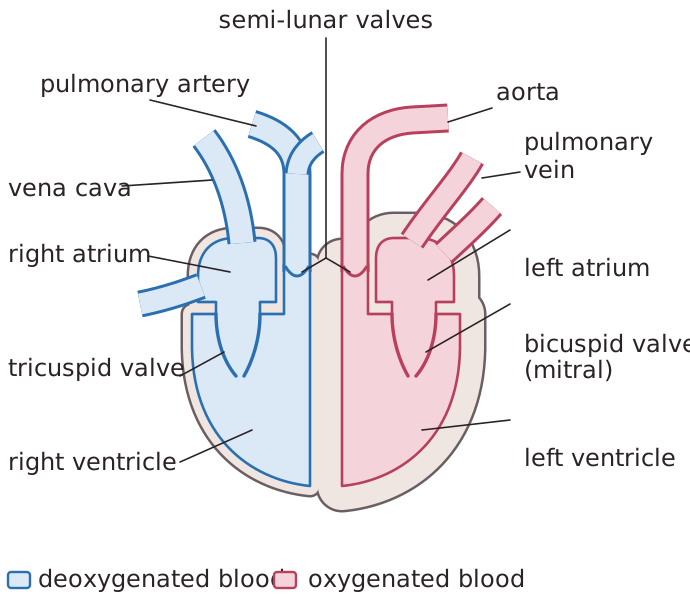
The heart beats 60 to 70 times a minute. For each heart beat it goes through the cardiac cycle. There are two phases of the cardiac cycle - contraction (systole) and relaxation(diastole).DiastoleThe atria and ventricles are relaxed. Blood flows into the heart from the vena cava and pulmonary vein aided by gravity and the pressure in the atria rises as it fills.The AV valves open when pressure in the atria exceeds pressure in the ventricles.The semilunar valves are closed as the pressure in the ventricles is less than the pressure in the aorta and pulmonary artery.Atrial SystoleThe atria contract. Blood is pushed from the atria to the ventricles through the AV. Semi-lunar valves remain closed.Ventricular SystoleThe ventricles are full so the walls contract. Pressure in the ventricle rises closing the AV valves and preventing the backflow of blood.With the AV valves closed The pressure increases further until it exceeds the pressure in the aorta and pulmonary artery. This pushes the semi-lunar valves open and force blood through the aorta and pulmonary artery.