 BRAINCAKE
tRNA
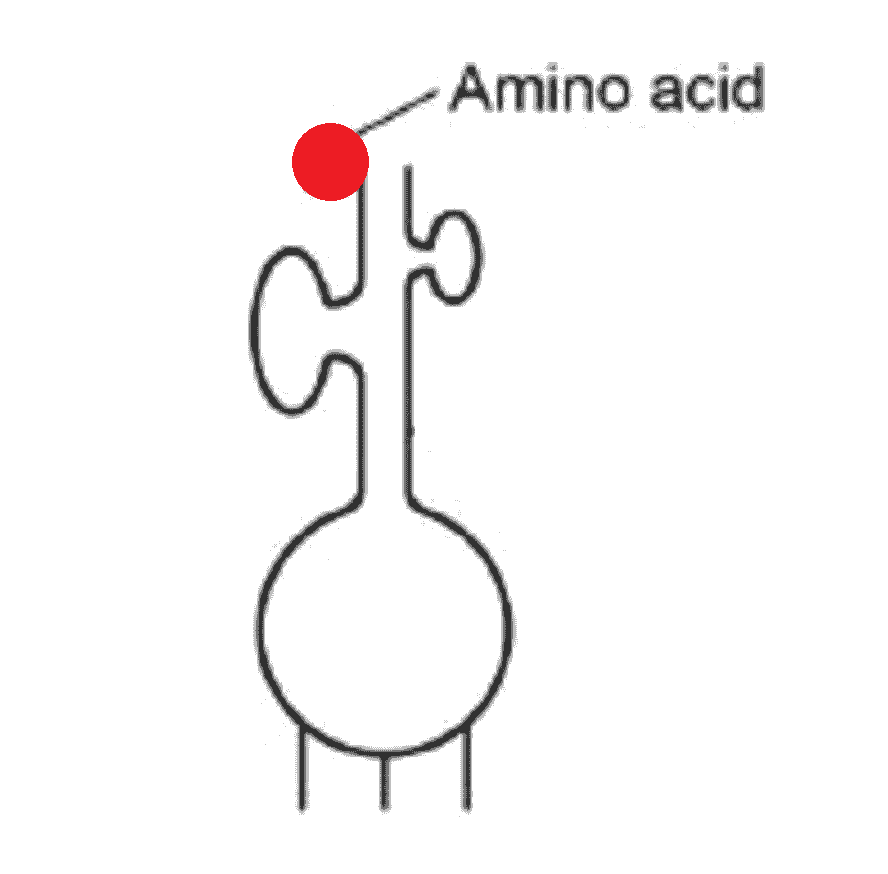
tRNA is a relatively small molecule of around 80 nucleotides that is a single strand folded into a clover leaf shape by hydrogen bonding between bases.
One end of the tRNA molecule extends beyond the other and this acts as an amino-acid binding site. Each tRNA molecule binds a different amino acid with an ester bond.
Sign in free to see the rest of this lesson, the R.E.C.I.P.E. recall steps and the quiz
BrainCake is free. Make an account in seconds and pick up where this page stops.
Key terms in this lesson
- hydrogen bond
- A weak electrostatic attraction between a slightly positive hydrogen atom on one polar molecule and a slightly negative atom, such as oxygen or nitrogen, on another.
- nucleotide
- A molecule made of a pentose sugar, a phosphate group and a nitrogen-containing base.
- complementary base pairing
- The specific pairing of bases by hydrogen bonds, adenine with thymine (or uracil) and guanine with cytosine.
- codon
- A sequence of three bases on mRNA that codes for a specific amino acid or a stop signal.
More in DNA, Genes and Protein Synthesis
- The Human Karyotype
- Protein Synthesis
- RNA
- mRNA
- Transcription
- Splicing pre-mRNA
- Translation
- Cracking the DNA Code
All 15 lessons in DNA, Genes and Protein Synthesis · All AQA AS-level Biology topics