 BRAINCAKE
Anaerobic Respiration - Mammals
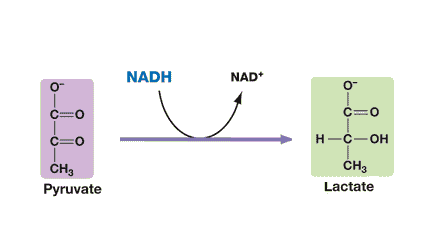
Animals respire anaerobically as a means of overcoming a temporary shortage of oxygen. This is useful when the amount of oxygen is very low, for an animal living in water. However, anaerobic respiration most often occurs in muscles during strenuous exercise when oxygen is used up more rapidly than it is supplied. Pyruvate is reduced to lactate using the hydrogen from reduced NAD and NAD is regenerated so that glycolysis can continue.
Sign in free to see the rest of this lesson, the R.E.C.I.P.E. recall steps and the quiz
BrainCake is free. Make an account in seconds and pick up where this page stops.
Key terms in this lesson
- Glycolysis
- The first stage of respiration, occurring in the cytoplasm, in which glucose is split into two molecules of pyruvate with a net yield of ATP and reduced NAD.
More in Respiration
- Lysis
- Substrate Level Phosphorylation
- The Link Reaction
- The Krebs Cycle.
- oxidative phosphorylation
- ATP Synthase
- Creatine Phosphate
- Anaerobic Respiration - Plants and Microorganisms.
All 12 lessons in Respiration · All OCR A-level Biology topics