 BRAINCAKE
Energy Supply during Muscle Contraction
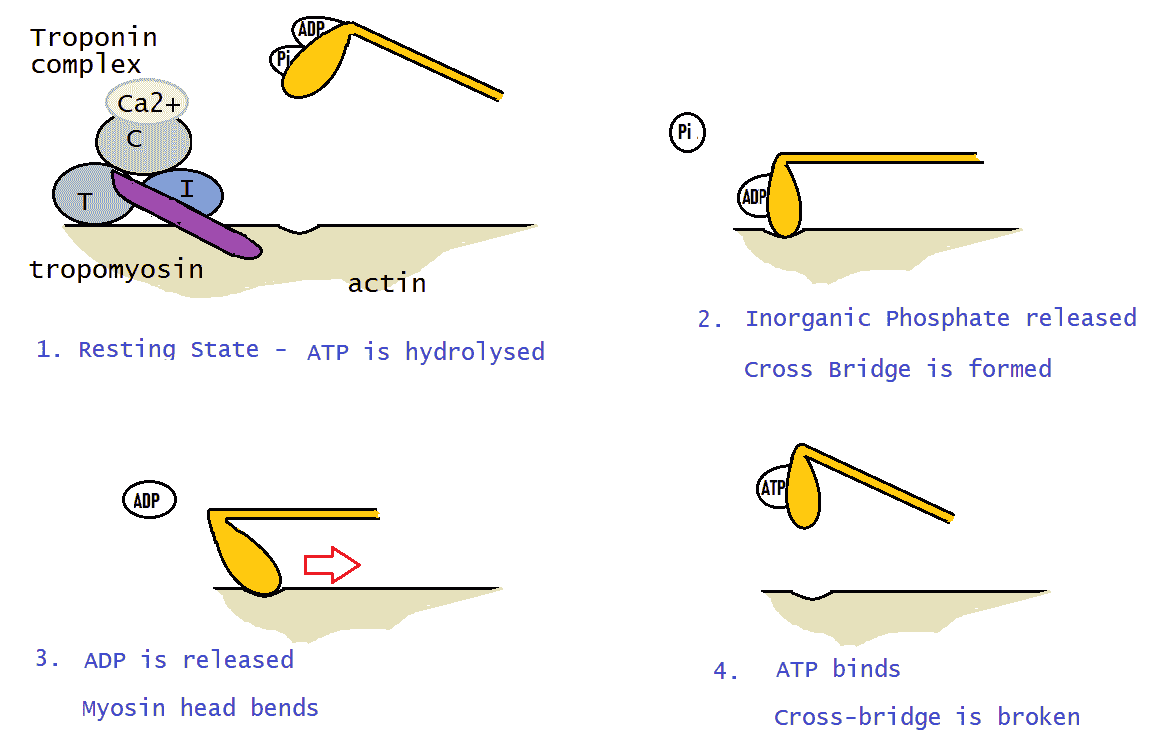
Large quantities of ATP are required for the movement of the myosin heads, the active transport of calcium ions into the SR and the sodium-potassium pump restoring the sarcolemma to its resting potential after an action potential.
Most of the ATP comes from oxidative phosphorylation which occurs in the presence of oxygen during aerobic respiration. Aerobic respiration is therefore sufficient for long periods of moderate exercise.
Sign in free to see the rest of this lesson, the R.E.C.I.P.E. recall steps and the quiz
BrainCake is free. Make an account in seconds and pick up where this page stops.
Key terms in this lesson
- Action potential
- The temporary reversal of the electrical charge across an axon membrane, from about -70mV to +40mV, that occurs when a neurone is stimulated above threshold.
- Resting potential
- The difference in electrical charge across an axon membrane (about -70mV, inside negative relative to outside) when a neurone is not conducting an impulse.
- Myosin
- A thick protein filament in a myofibril with globular heads that bind to actin and pull it during muscle contraction.
- Sarcolemma
- The specialised cell surface membrane of a muscle fibre.
- ATP
- Adenosine triphosphate, the universal energy currency of cells, which releases energy for cellular reactions when hydrolysed to ADP and inorganic phosphate.