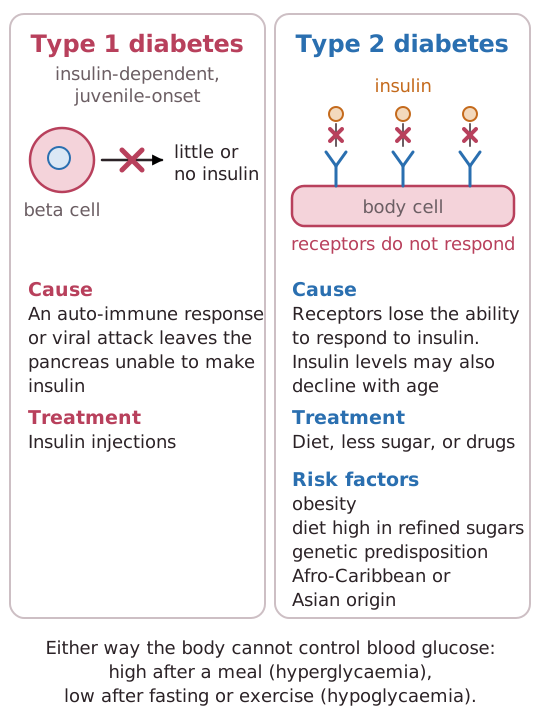
There are two types of diabetes in which the body cannot control the blood glucose concentration. After a meal the person develops a high blood glucose concentration (hyperglycaemia) and after fasting or exercise they may develop a low blood glucose concentration (hypoglycaemia) because of a failure to store glycogen.
Type 1 diabetes or juvenile-onset diabetes is insulin-dependent. It is thought that an auto-immune response or viral attack leaves the pancreas unable to manufacture insulin. Treatment is by insulin injections.
In Type 2 diabetes insulin receptors lose their ability to respond to insulin and insulin levels may decline with age. Risk factors are obesity, a diet high in refined sugars, genetic predisposition or being of Afro-Caribbean or Asian origin.