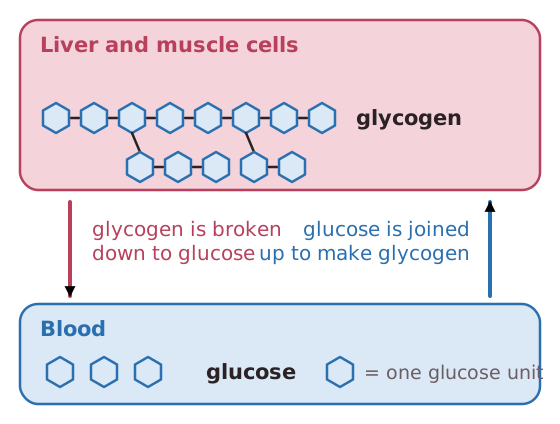
The blood glucose concentration increases after a carbohydrate-rich meal. The glucose is absorbed into the blood through the digestive system. A high blood sugar level would lower the water potential and damage cells by the effects of osmosis. Low blood glucose would mean that cells would not have enough glucose for respiration.The amount of glucose in the blood can be raised by glycogenolysis - the conversion of glycogen in liver and muscle cells to glucose. Blood glucose levels can also be raised by making glucose from sources such as lipids and amino-acids - gluconeogenesis. Blood glucose levels can be reduced by respiration or conversion to glycogen (glycogenesis) which is stored in the liver.