 BRAINCAKE
Adrenaline and the Second Messenger Model
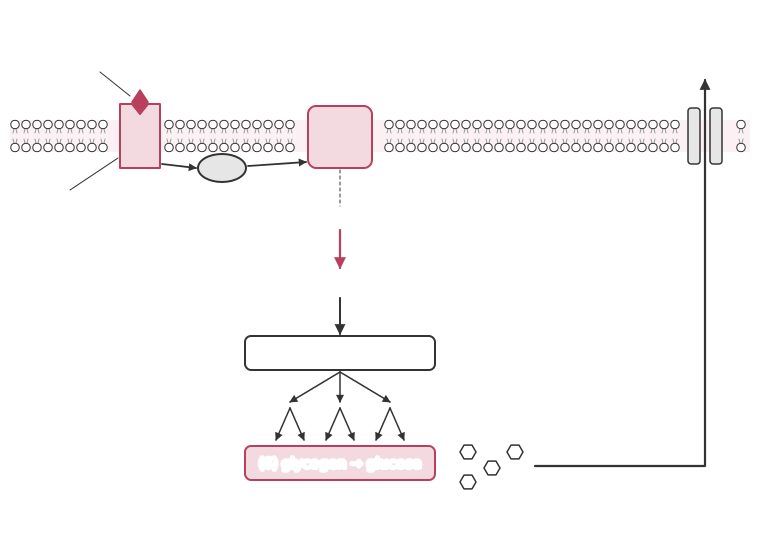
Adrenaline is a hormone made from an amino acid. It is not lipid-soluble, so it cannot cross the cell-surface membrane. Instead it binds to specific receptors on the membrane of its target cells, and a molecule inside the cell carries the signal on. This is the second messenger model.
In a liver cell:
1. Adrenaline, the first messenger, binds to a specific adrenaline receptor on the cell-surface membrane. The receptor has a shape complementary to adrenaline.
2. Binding activates a G protein in the membrane, which in turn activates the enzyme adenyl cyclase.
3. Activated adenyl cyclase converts ATP into cyclic AMP (cAMP).
Sign in free to see the rest of this lesson, the R.E.C.I.P.E. recall steps and the quiz
BrainCake is free. Make an account in seconds and pick up where this page stops.
Key terms in this lesson
- g protein
- A membrane protein activated when a hormone binds its receptor, which in turn activates an enzyme such as adenyl cyclase to start a signalling cascade.
- adenyl cyclase
- An enzyme activated via a G protein that converts ATP into cyclic AMP, a second messenger.
More in Hormonal Communication
- Mechanism of Insulin Secretion
- Diabetes Mellitus
- The Fight or Flight Response
- Coordinating Nervous and Hormonal Responses
- The Cardiovascular Centre in the Medulla
- Control of Heart Rate
- Baroreceptors
- Chemoreceptors
All 19 lessons in Hormonal Communication · All OCR A-level Biology topics