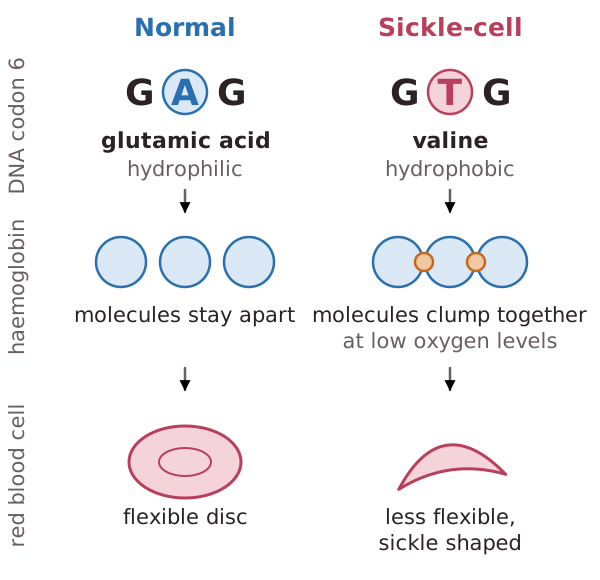
In sickle cell anaemia, abnormal haemoglobin clumps together deforming the shape of red blood cells and causing them to become sickle shaped. The red blood cells (erythrocytes) are less flexible and have difficulty squeezing through the capillaries. Not enough oxygen reaches the tissues due to reduced blood flow causing anaemia.
The disease is caused by a mutation in codon-6. Thymine replaces adenine in the DNA and the amino-acid valine is substituted for glutamic acid. Glutamic acid is hydrophilic whilst valine is hydrophobic. Hydrophobic interactions between valine molecules on adjacent haemoglobin molecules occur when the partial pressure of oxygen is low causing the haemoglobin molecules to stick together. The alleles are codominant: heterozygotes make both normal and sickle haemoglobin and have sickle cell trait. They are only mildly affected and are also resistant to malaria.