 BRAINCAKE
Non-coding DNA
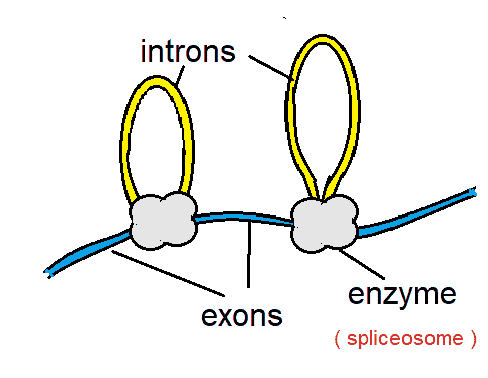
The human genome consists of 20-25,000 genes, making up about 25 of the human DNA. Large non-coding regions of DNA called introns are spliced from pre-mRNA in the nucleus before it leaves through the nuclear pores. The exons that are spliced together are then translated in the cytoplasm. Other non-coding regions of DNA are telomeres at the ends and centromeres with which chromosomes attach to the spindle during nuclear division.
Sign in free to see the rest of this lesson, the R.E.C.I.P.E. recall steps and the quiz
BrainCake is free. Make an account in seconds and pick up where this page stops.
Key terms in this lesson
- Intron
- A non-coding section of a gene, or pre-mRNA, that is removed during splicing before translation.
- Exon
- A coding section of a gene, or pre-mRNA, that remains after splicing and is translated.
More in Genetic Engineering and Biotechnology
- Gel Electrophoresis
- DNA Profiling
- The Polymerase Chain Reaction
- DNA Sequencing
- Automated Sequencing
- Pathogens, DNA Barcoding
- Genomics and Proteomics
- Recombinant DNA
All 17 lessons in Genetic Engineering and Biotechnology · All OCR A-level Biology topics