 BRAINCAKE
Transects
A transect is a line across a habitat along which samples are taken systematically. Transects are used to study how the distribution of species changes along an environmental gradient, for example from low to high tide on a rocky shore, from a hedge into a field, or from open ground into a wood.
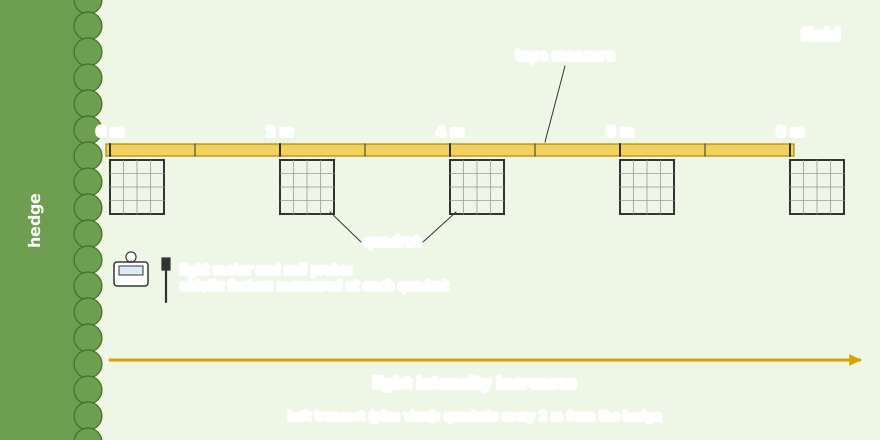
Types of transect:
- Line transect: a tape is laid out and the species touching the line at regular intervals (e.g. every 1 m) are recorded. Quick, but shows only presence, not abundance.
- Belt transect: quadrats are placed at regular intervals along the tape, either touching (a continuous belt) or spaced out (an interrupted belt), and the abundance of each species is measured in each quadrat. Gives more information but takes longer.
Sign in free to see the rest of this lesson, the R.E.C.I.P.E. recall steps and the quiz
BrainCake is free. Make an account in seconds and pick up where this page stops.
More in The Nature of Ecosystems
- Quadrats
- ACFOR Scale
- Point Quadrats
- Permanent Quadrats
- More Ecological Techniques
- Hypothesis Testing
- Spearman's Rank Correlation Coefficient
- Student's t-Test
All 39 lessons in The Nature of Ecosystems · All Edexcel A-level Biology topics