In real ecosystems most organisms eat more than one type of food and are eaten by more than one predator. A food web links many food chains together to show all the feeding relationships in a community.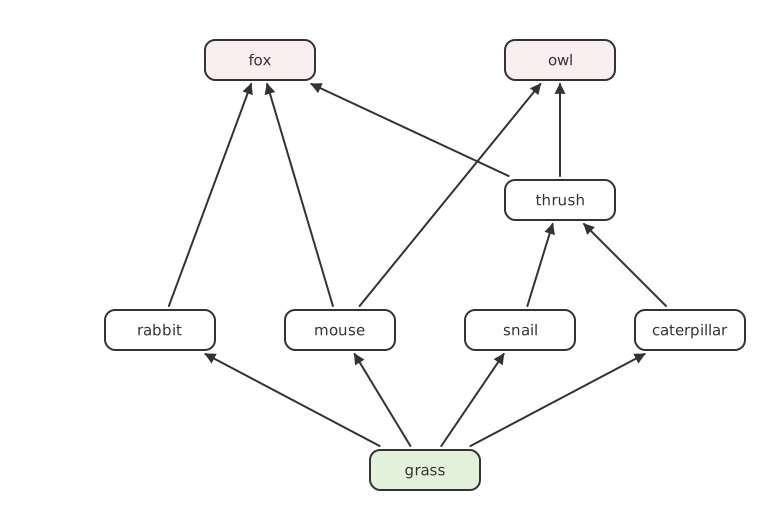
- an organism can be at more than one trophic level. A fox eating rabbits is a secondary consumer; a fox eating a thrush that ate snails is a tertiary consumer.
- species are interdependent: a change in the population of one species affects others, often in several directions at once.Predicting effects: suppose a disease kills most of the rabbits in the web above.
- Foxes have less food, so their numbers may fall, or they may eat more mice and thrushes.
- Grass is grazed less, so it will increase, giving more food for other herbivores such as mice.
- If foxes switch to eating mice, the mouse population may fall.Because there are many possible pathways, the overall effect is hard to predict exactly. In an exam, always give a reason linked to feeding: more food, less food, more predators or fewer predators.Complex food webs with many links tend to be more stable. If one food source declines, consumers can switch to another, so a single change is less likely to make other populations crash. Simple food webs, such as those in the Arctic, are more easily disrupted.