 BRAINCAKE
Ecological Pyramids
An ecological pyramid shows a quantity at each trophic level of a food chain as a horizontal bar. Producers are always at the bottom, with each consumer level stacked above. The width of each bar is drawn to scale, proportional to the quantity it represents.
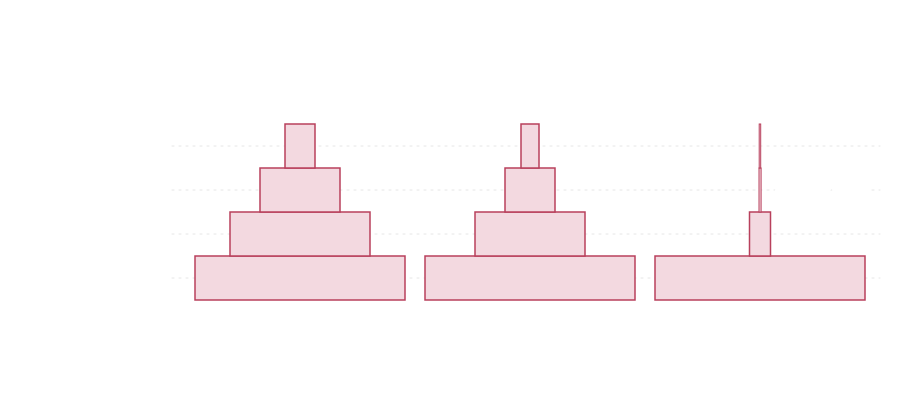
There are three types:
- Pyramid of numbers: the number of individual organisms at each level.
- Pyramid of biomass: the mass of living material at each level, usually dry mass per unit area (g m−2) at one moment.
- Pyramid of energy: the energy passing through each level per unit area per unit time (kJ m−2 year−1).
Sign in free to see the rest of this lesson, the R.E.C.I.P.E. recall steps and the quiz
BrainCake is free. Make an account in seconds and pick up where this page stops.
Key terms in this lesson
- calorimeter
- An instrument used to measure the energy content of a sample by burning it and measuring the heat released.
More in The Efficiency of Ecosystems
- Food Chains
- Food Webs
- Pyramid of Numbers
- Pyramid of Biomass
- Inverted Pyramids of Numbers
- Energy Losses in Producers
- Energy Losses between Consumers
- Efficiency of Energy Transfer
All 20 lessons in The Efficiency of Ecosystems · All Edexcel A-level Biology topics