Gene technology is used to make human proteins for medicine, which were previously scarce, expensive or unsafe.Human insulin
People with type 1 diabetes need insulin injections. Before 1982, insulin was extracted from the pancreases of cows and pigs killed for meat. Since 1982, human insulin has been made by genetically modified bacteria.
1. cDNA for human insulin is made from mRNA using reverse transcriptase, or synthesised.
2. It is inserted into plasmids, which are taken up by bacteria such as E. coli.
3. Transformed bacteria are identified and grown in large tanks called fermenters.
4. The insulin is extracted and purified.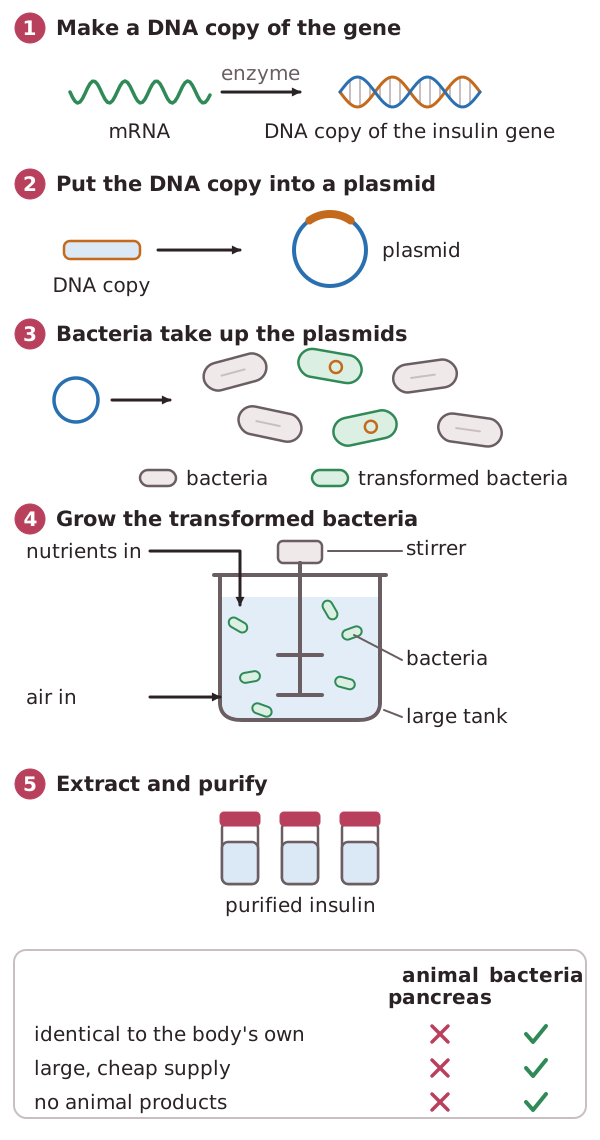 Advantages over animal insulin
• It is identical to the body's own insulin, so it causes fewer allergic reactions and works more predictably.
• A large, reliable supply can be made cheaply, whatever the demand.
• It avoids ethical and religious objections to using animal products.Other products
• Human growth hormone, previously extracted from the pituitary glands of dead people.
• Factor VIII, a blood clotting protein for people with haemophilia. When made by gene technology it carries no risk of viral infections such as HIV, which were passed on through factor VIII from donated blood.
• Vaccines, such as the hepatitis B vaccine, made in yeast.Yeast or mammalian cells are sometimes used instead of bacteria because, being eukaryotic, they can modify proteins after translation, for example by adding carbohydrate groups, which bacteria cannot do.
People with type 1 diabetes need insulin injections. Before 1982, insulin was extracted from the pancreases of cows and pigs killed for meat. Since 1982, human insulin has been made by genetically modified bacteria.
1. cDNA for human insulin is made from mRNA using reverse transcriptase, or synthesised.
2. It is inserted into plasmids, which are taken up by bacteria such as E. coli.
3. Transformed bacteria are identified and grown in large tanks called fermenters.
4. The insulin is extracted and purified.
Advantages over animal insulin• It is identical to the body's own insulin, so it causes fewer allergic reactions and works more predictably.
• A large, reliable supply can be made cheaply, whatever the demand.
• It avoids ethical and religious objections to using animal products.Other products
• Human growth hormone, previously extracted from the pituitary glands of dead people.
• Factor VIII, a blood clotting protein for people with haemophilia. When made by gene technology it carries no risk of viral infections such as HIV, which were passed on through factor VIII from donated blood.
• Vaccines, such as the hepatitis B vaccine, made in yeast.Yeast or mammalian cells are sometimes used instead of bacteria because, being eukaryotic, they can modify proteins after translation, for example by adding carbohydrate groups, which bacteria cannot do.