 BRAINCAKE
oxidative phosphorylation
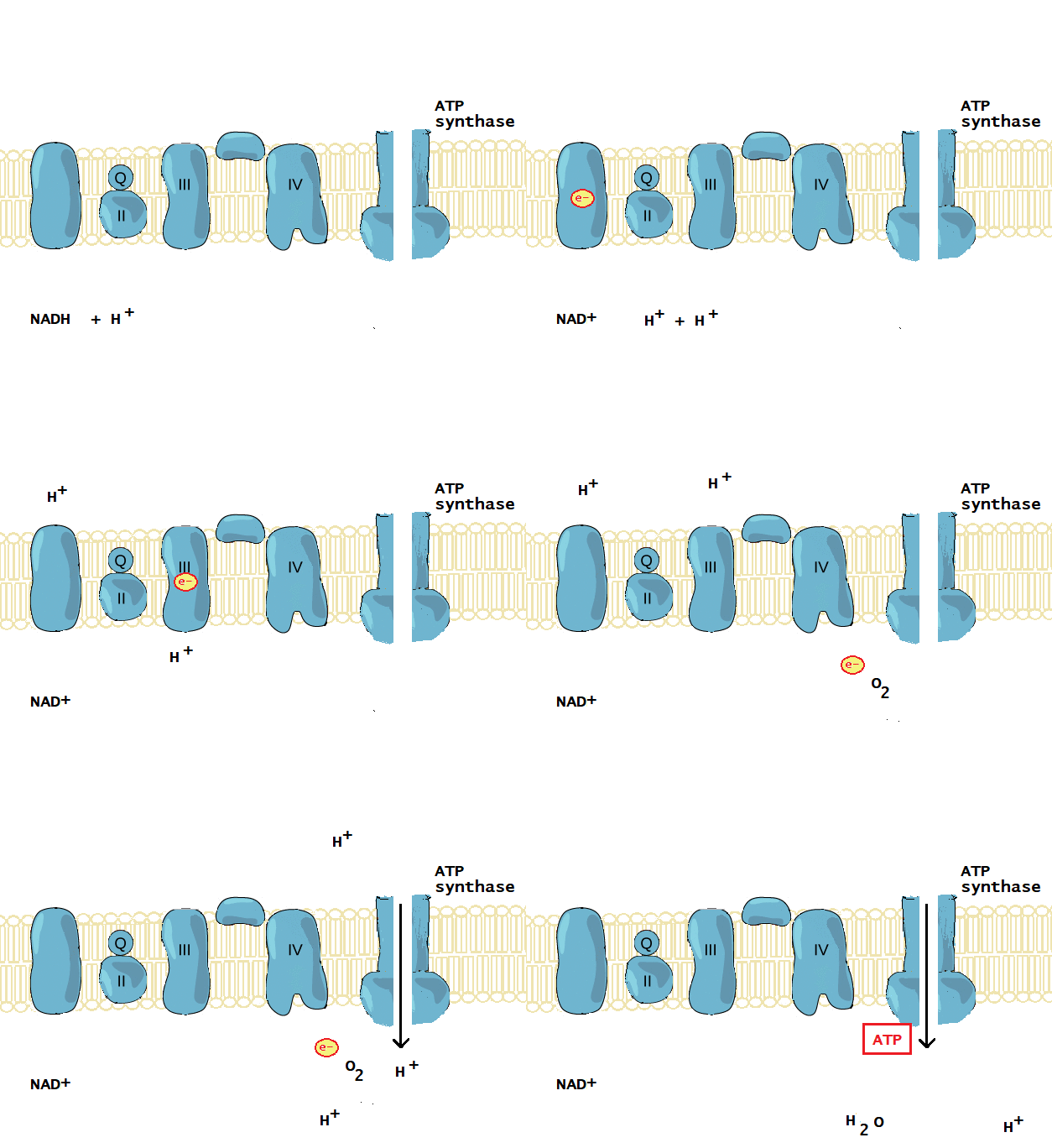
The electron transport chain (ETC) is a group of protein complexes and mobile electron carriers in the inner mitochondrial membrane. Each can accept electrons from reduced NAD or reduced FAD and be reduced. The electron carrier is then oxidised as the electrons are passed to the next electron carrier in the chain then finally to oxygen which forms water. The energy required for each redox step is less than for the previous one so each subsequent reduction can be coupled with the energy-requiring active transport of hydrogen ions into the inter-membrane space.
Sign in free to see the rest of this lesson, the R.E.C.I.P.E. recall steps and the quiz
BrainCake is free. Make an account in seconds and pick up where this page stops.
Key terms in this lesson
- ATP synthase
- An enzyme that spans a membrane and synthesises ATP from ADP and inorganic phosphate as protons flow through it down their concentration gradient.
- ATP
- Adenosine triphosphate, the universal energy currency of cells, formed by adding an inorganic phosphate to ADP and hydrolysed to release energy for cellular reactions.
More in Respiration
- Lysis
- Substrate Level Phosphorylation
- The Link Reaction
- The Krebs Cycle.
- ATP Synthase
- ATP Synthase
- Anaerobic Respiration - Plants and Microorganisms.
- Anaerobic Respiration - Mammals
All 12 lessons in Respiration · All AQA A-level Biology topics